When conversion rates disappoint, most businesses reach for the visible levers: a new design, sharper copy, a different offer. Those matter. But a large and often invisible factor sits underneath them: performance. A page that loads slowly, a search that lags, a checkout that occasionally throws an error, or a form that freezes on a mid-range phone all reduce the number of visitors who complete what you want them to do. Performance is a conversion feature. This article explains how each layer of a full-stack application affects your bottom line and how to prioritise improvements.
Why speed changes behaviour
People do not consciously measure milliseconds, but they feel friction. When something responds instantly, it feels trustworthy and effortless; when it hesitates, attention drifts, doubts creep in and abandonment rises. Studies published by major search and commerce companies over the years have consistently linked faster pages with better engagement and conversion, and slower experiences with higher bounce rates. Exact numbers vary by site and audience, so treat published statistics as directional and measure your own funnel.
Speed also affects discovery. Search engines use page experience signals, including Core Web Vitals, as part of ranking, and a fast site tends to earn more visits from the same content. We cover those metrics in detail in our guide on why slow sites lose customers.

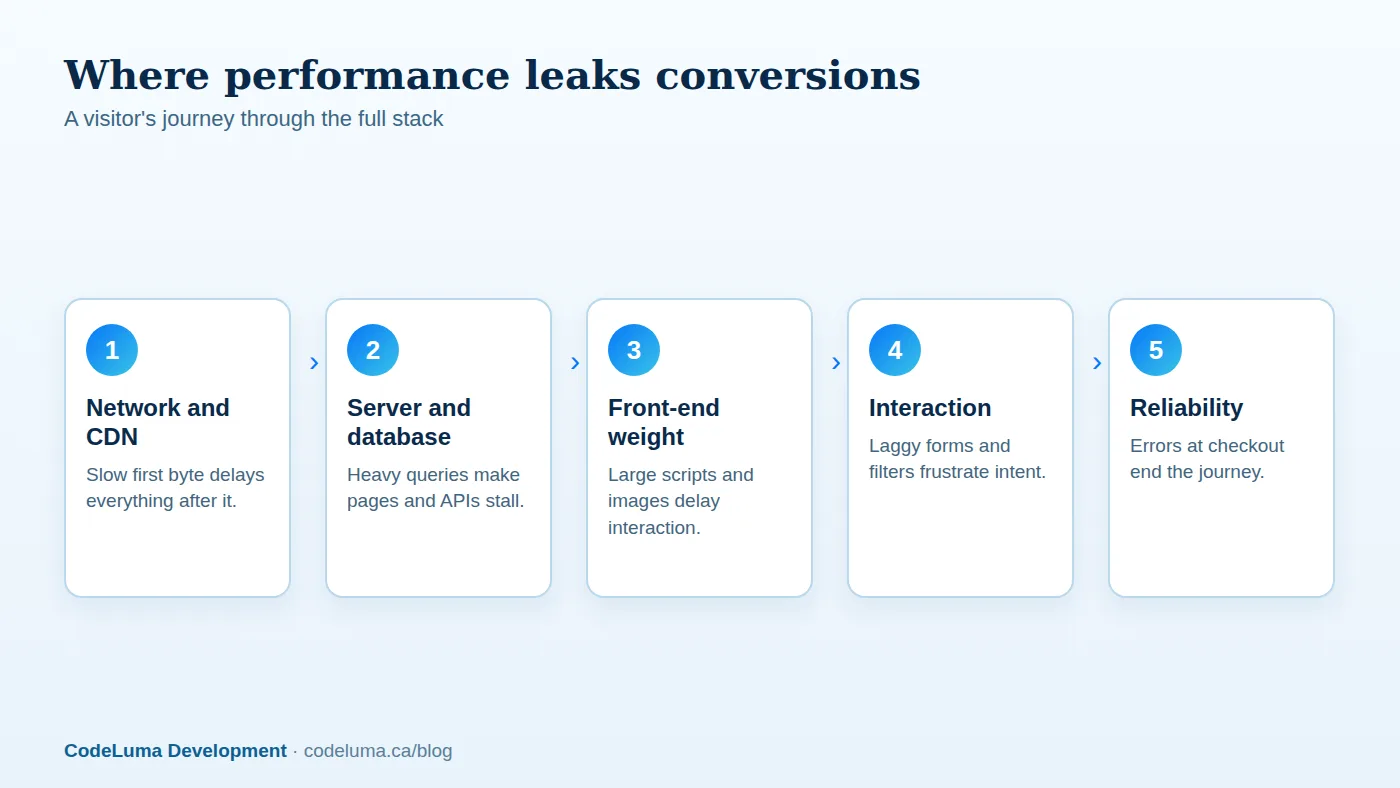
Layer one: the network and the edge
The journey begins with DNS lookup, connection setup and time to first byte. Serving assets from a CDN close to the visitor, enabling modern protocols such as HTTP/2 or HTTP/3, compressing responses, and caching pages that do not change per user reduce that wait dramatically. For visitors on mobile networks or far from your server, these gains are the difference between a page that appears and one that does not.
Layer two: the server and database
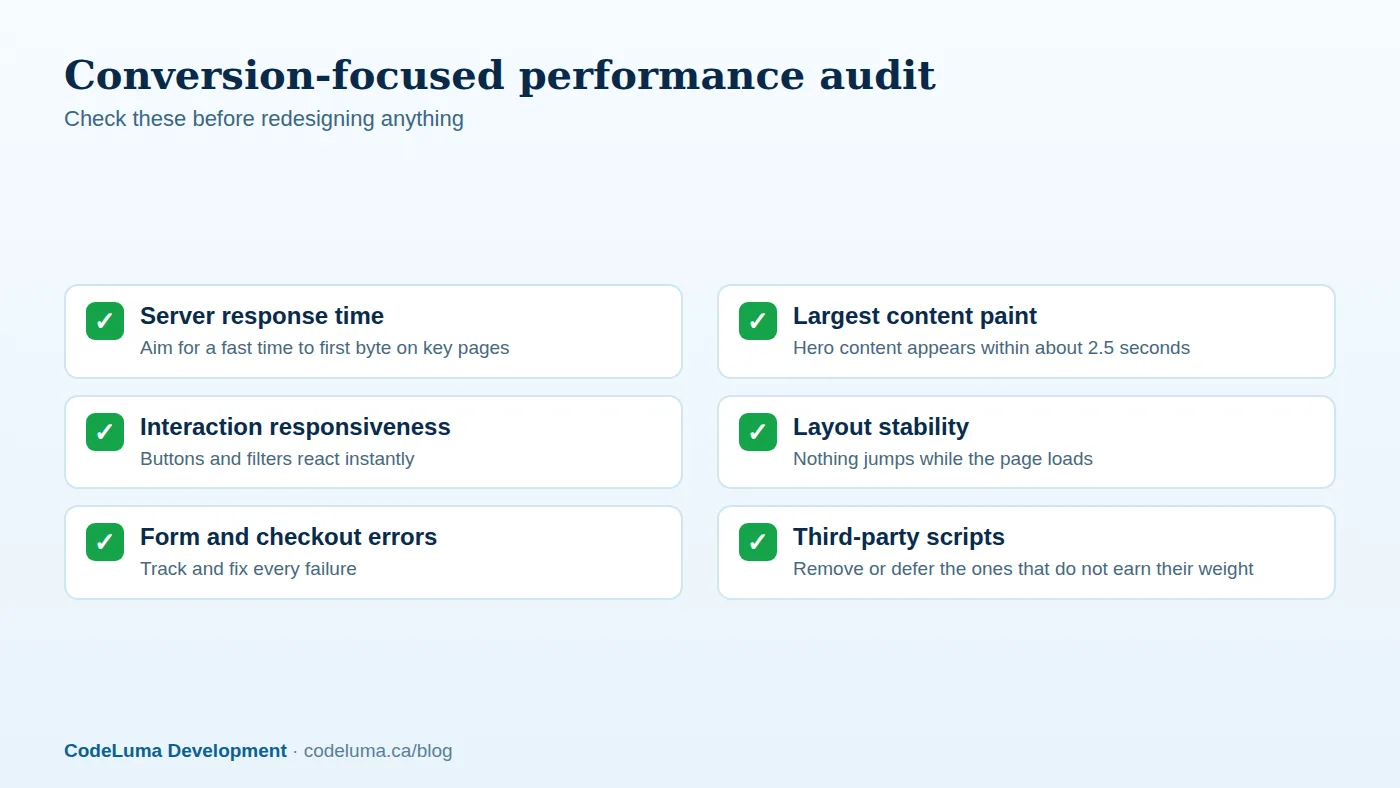
A fast network cannot rescue a slow backend. The usual culprits are unindexed database queries, N+1 query patterns that trigger hundreds of reads per page, synchronous calls to slow third-party services, and missing caches for expensive computations. Fixes are often unglamorous and highly effective: add the right indexes, batch queries, cache repeated reads, move slow tasks such as emails and PDF generation into background jobs, and set timeouts on external calls. Measure server response time on your key pages: home, category, product, search, cart and checkout. Anything consistently slow there deserves attention.
Layer three: the front end
Modern front ends can be surprisingly heavy. Large JavaScript bundles, unoptimised images, render-blocking CSS, custom fonts loaded late, and dozens of third-party tags all delay the moment when a visitor can see and use the page. Practical improvements include:
- Compressing and resizing images and serving modern formats such as WebP or AVIF.
- Lazy-loading below-the-fold images while prioritising the hero image.
- Splitting and deferring JavaScript so critical content loads first.
- Inlining critical CSS and removing unused styles.
- Preloading key fonts and using sensible fallbacks.
- Auditing third-party scripts and removing any that do not clearly pay for their cost.
Layer four: interaction and forms
Conversion happens in interactions: filtering products, entering an address, selecting a date, submitting a form. Slow or janky interactions kill intent. Watch interaction responsiveness, keep validation instant and friendly, avoid layout shifts as content loads, and make sure forms work well on small screens with the right keyboard types and autofill. Simple details, such as address autocomplete and saved payment methods, remove friction and add revenue.
Layer five: reliability
Downtime and intermittent errors do not just lose the sessions affected; they damage trust. A checkout that fails one time in fifty quietly costs two percent of your revenue. Track errors in production, alert on spikes, test critical paths automatically, and have clear fallbacks when third parties fail. Reliability work rarely appears on a design brief, yet it often delivers the fastest return.
Connect technical metrics to business metrics
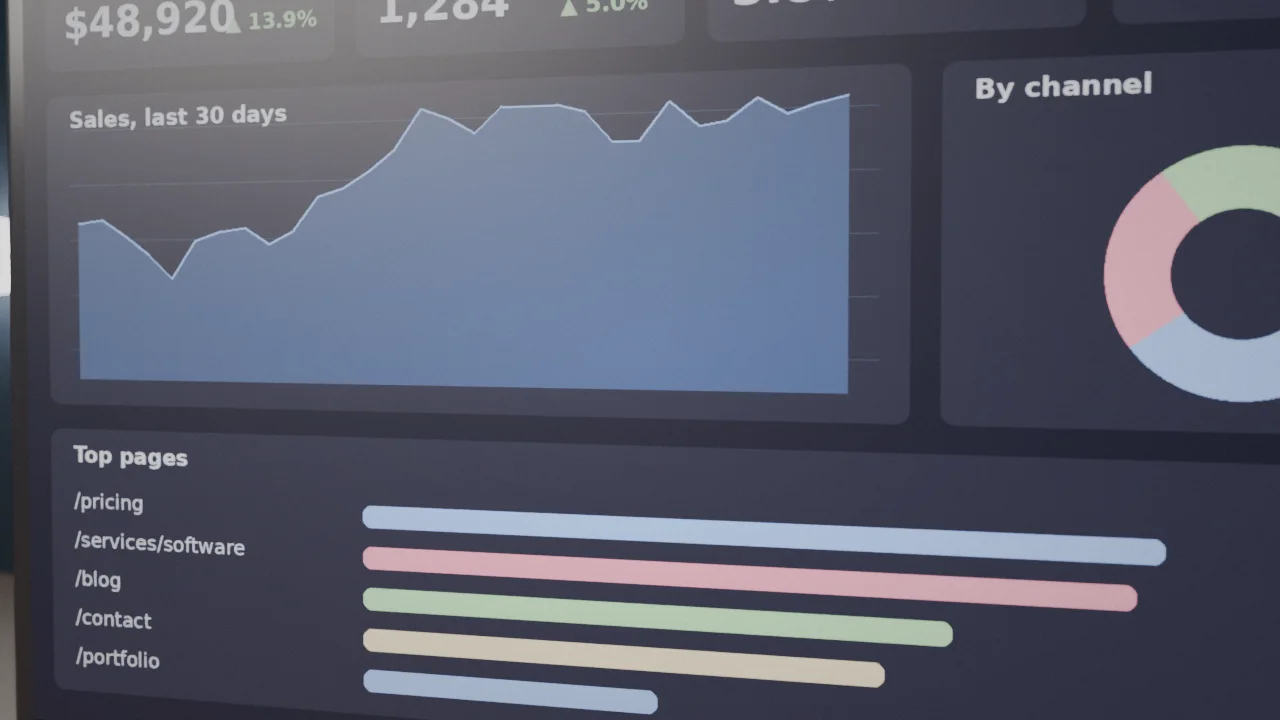
Performance work sticks when it is tied to outcomes. Instrument your funnel so you can see conversion by page speed bucket, device type and connection quality. Compare the conversion rate of visitors who saw a fast page with those who saw a slow one, and estimate the revenue difference. This turns "the site feels slow" into a business case: "improving the checkout response time by a second could add this much revenue per month." Run experiments where practical: ship a performance improvement to half your traffic and compare.
Prioritise by impact
- Fix the money pages first: product, pricing, booking and checkout flows.
- Measure real users with field data, not just lab tests on a fast laptop.
- Pick low-effort, high-impact wins: image compression, caching, removing unused scripts.
- Then attack structural problems: database design, architecture and rendering strategy.
- Set a performance budget so new features cannot quietly undo the gains.
Design and performance work together
Good design supports speed: fewer, purposeful elements, restrained animation, readable typography and a clear visual hierarchy lead to lighter pages and clearer decisions. Involve developers early in design so beautiful ideas do not create expensive pages, and involve designers when technical trade-offs affect the experience. The teams that convert best treat design, content and engineering as one system.
Where to start
Run a performance and conversion audit of your top five pages: measure real-user speed, error rates and funnel drop-off; identify the three biggest bottlenecks; estimate the revenue at stake. A structured audit like this usually produces a prioritised list within days, and the first improvements often pay for the effort quickly. A web development partner who understands the full stack can fix problems where they actually live, rather than treating symptoms in the front end alone.
Put this into practice with CodeLuma
CodeLuma optimises the whole stack, from database queries to front-end delivery, and ties performance work to conversion metrics so every improvement is measured in leads, sales and revenue.
- Website and web application development - fast, accessible, search-friendly builds.
- Custom software development - tailored systems, integrations and internal tools.
- Maintenance and support plans - updates, monitoring and ongoing improvement.
Start a conversation. Tell us about your project and we will reply with practical next steps, or browse all CodeLuma services. CodeLuma Development Inc. is based in Nova Scotia and works with teams across Canada and remotely.