King Abdulaziz
عبدالعزيزFounder of the Kingdom. Retook Riyadh in 1902, unified the country by 1932 and saw the first oil exports.
How a small oasis town on the edge of Wadi Hanifah became the starting point of a kingdom, twice lost and twice restored.
Founded by Imam Muhammad bin Saud in Diriyah. In 1744 he formed an alliance with the scholar Sheikh Muhammad ibn Abd al-Wahhab. At its height the state ruled most of the peninsula, until Ottoman-Egyptian forces besieged and destroyed Diriyah in 1818.
Imam Turki bin Abdullah restored Saudi rule and moved the capital to Riyadh. Family disputes weakened the state, and in 1891 it fell to the Al Rashid of Ha'il. The family went into exile in Kuwait.
Began with Abdulaziz bin Abdulrahman's recapture of Riyadh in 1902. After three decades of campaigns and treaties, the Kingdom of Saudi Arabia was proclaimed on 23 September 1932.
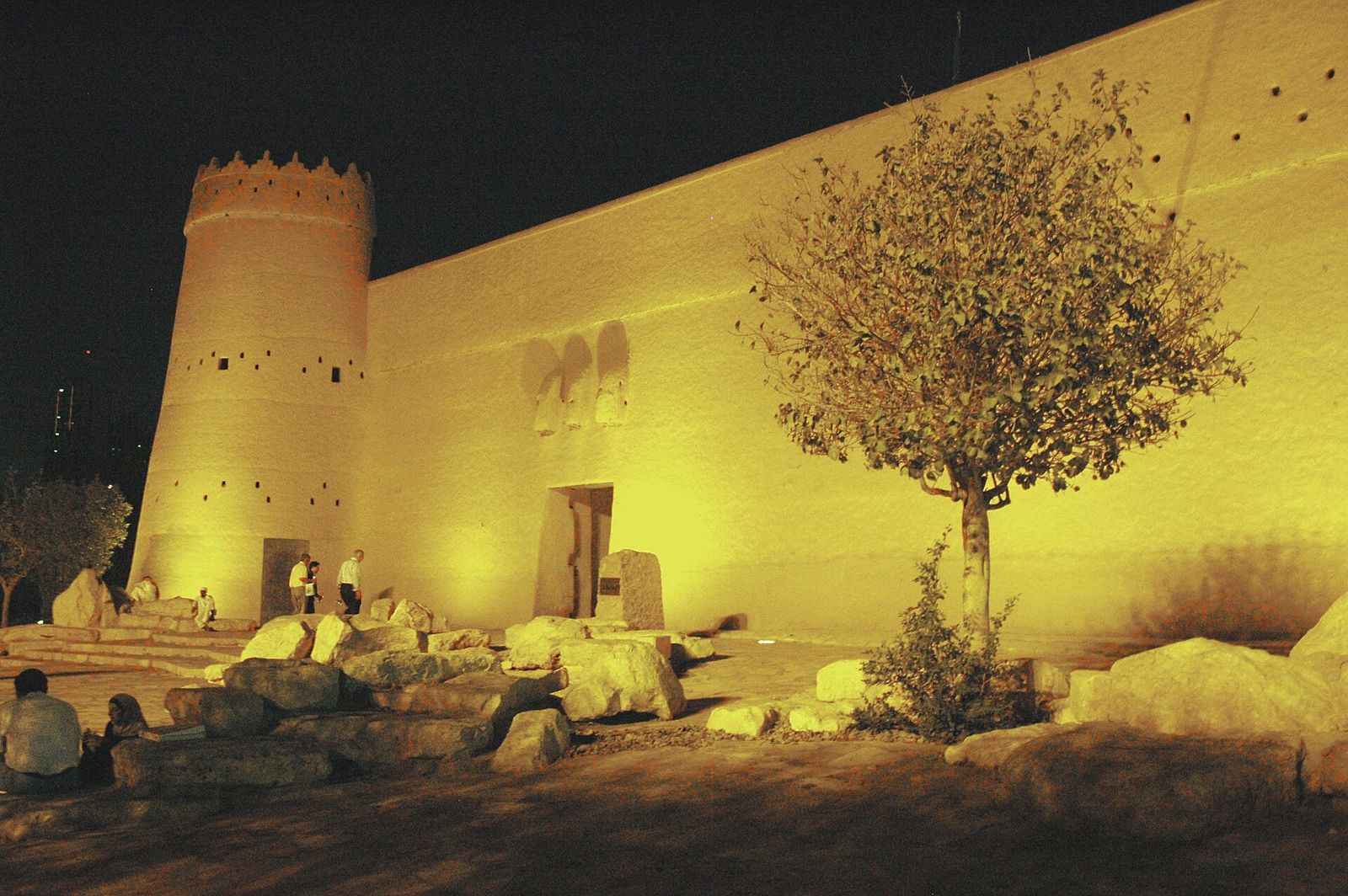 Masmak Fortress, Riyadh
From Riyadh, Abdulaziz, known in the West as Ibn Saud, extended his rule step by step: Al-Ahsa on the Gulf coast in 1913, Ha'il in the north in 1921 and the Hejaz, with Mecca, Medina and Jeddah, in 1925.
In 1926 he was proclaimed King of the Hejaz and in 1927 King of the Hejaz and Najd; the Treaty of Jeddah (1927) saw Britain recognise his independence. On 23 September 1932 the lands were united under one name: the Kingdom of Saudi Arabia.
In 1933 the King granted an oil concession to an American company. After five years of dry holes, Dammam Well No. 7 struck oil in March 1938. The company became Aramco, and oil revenue would transform a country of oasis towns and nomadic tribes within a single lifetime.
Every king since 1953 has been a son of the founder, King Abdulaziz.
Founder of the Kingdom. Retook Riyadh in 1902, unified the country by 1932 and saw the first oil exports.
Created many of the first ministries; King Saud University, the country's first university, was founded in 1957.
Championed modernisation, education for girls and development plans, and was a leading voice in the Muslim world.
Oversaw a boom in infrastructure and the new industrial cities of Jubail and Yanbu; the GCC was founded in 1981.
The first king to adopt the title Custodian of the Two Holy Mosques, and led major expansions of both mosques.
Founded KAUST and a huge overseas scholarship programme, and appointed the first women to the Shura Council.
Governor of Riyadh for nearly five decades before his reign. Vision 2030 was launched in 2016.
Marks the founding of the First Saudi State by Imam Muhammad bin Saud in 1727. First celebrated in 2022.
Remembers the adoption of the green flag in 1937, with the Shahada and a sword. First marked in 2023.
Celebrates the unification of the Kingdom of Saudi Arabia in 1932, with fireworks, parades and green across the country.
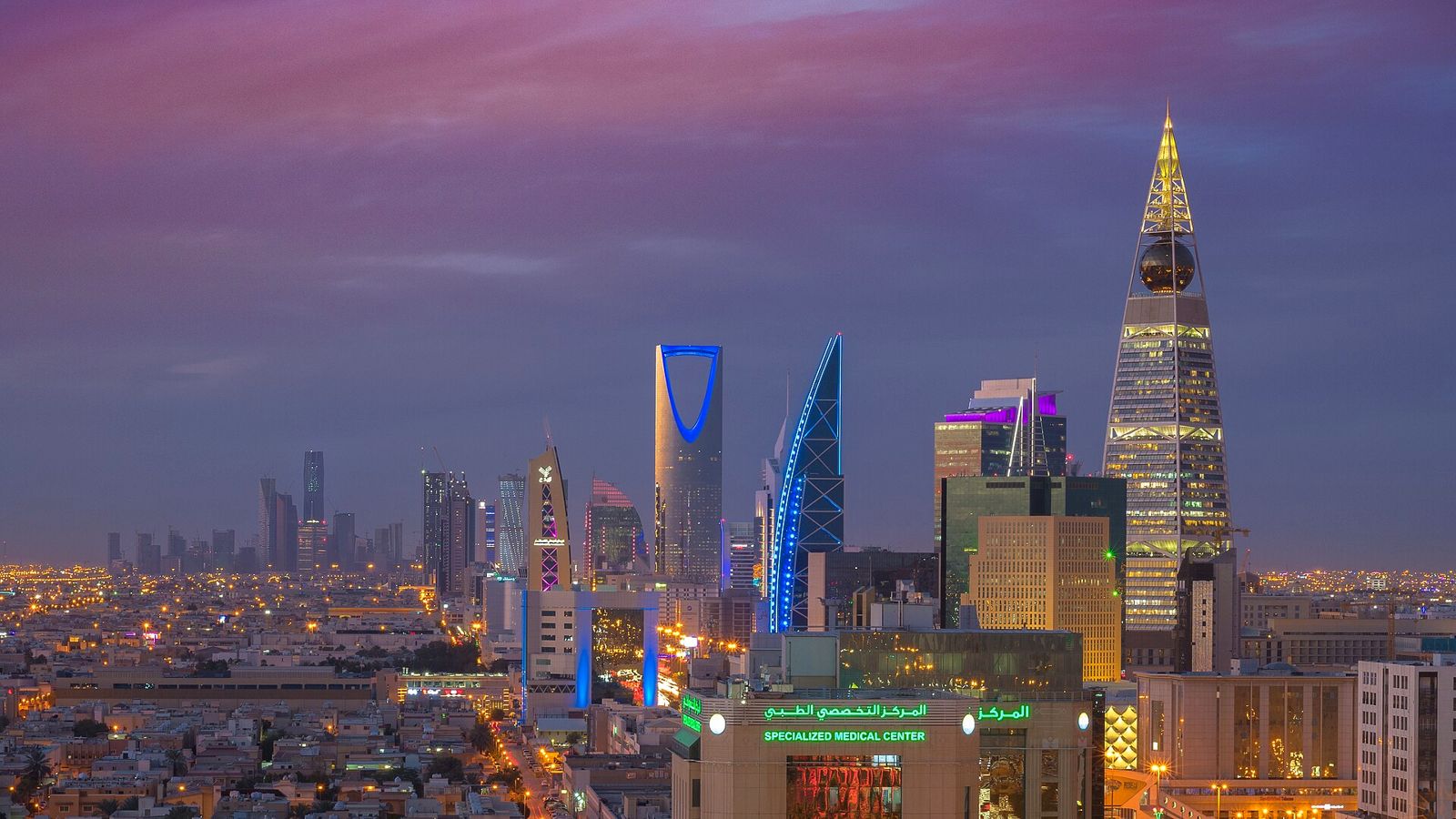 Riyadh skyline
In 1932 Riyadh was a walled town of mud-brick houses. Today it is a city of more than seven million people. Oil wealth paid for roads, schools, universities, hospitals and whole new industrial cities on the Gulf and Red Sea coasts.
Saudi Arabia co-founded OPEC in 1960 and the Gulf Cooperation Council in 1981. Since 2016, Vision 2030 has set out to diversify the economy, open the country to tourism and develop culture, entertainment and sport, with Riyadh hosting Expo 2030 and Saudi Arabia the 2034 FIFA World Cup.