Sample website by CodeLuma Development. Get a website like this →
Arabian ChronicleHistory of Saudi Arabia
HomeTimelineAncient ArabiaThe KingdomHeritage SitesCulture
Prehistory to the 18th century

Kingdoms before the Kingdom

Long before modern borders, the Arabian Peninsula was a land of lakes and hunters, caravan cities, incense routes and, in the 7th century, the birthplace of Islam.

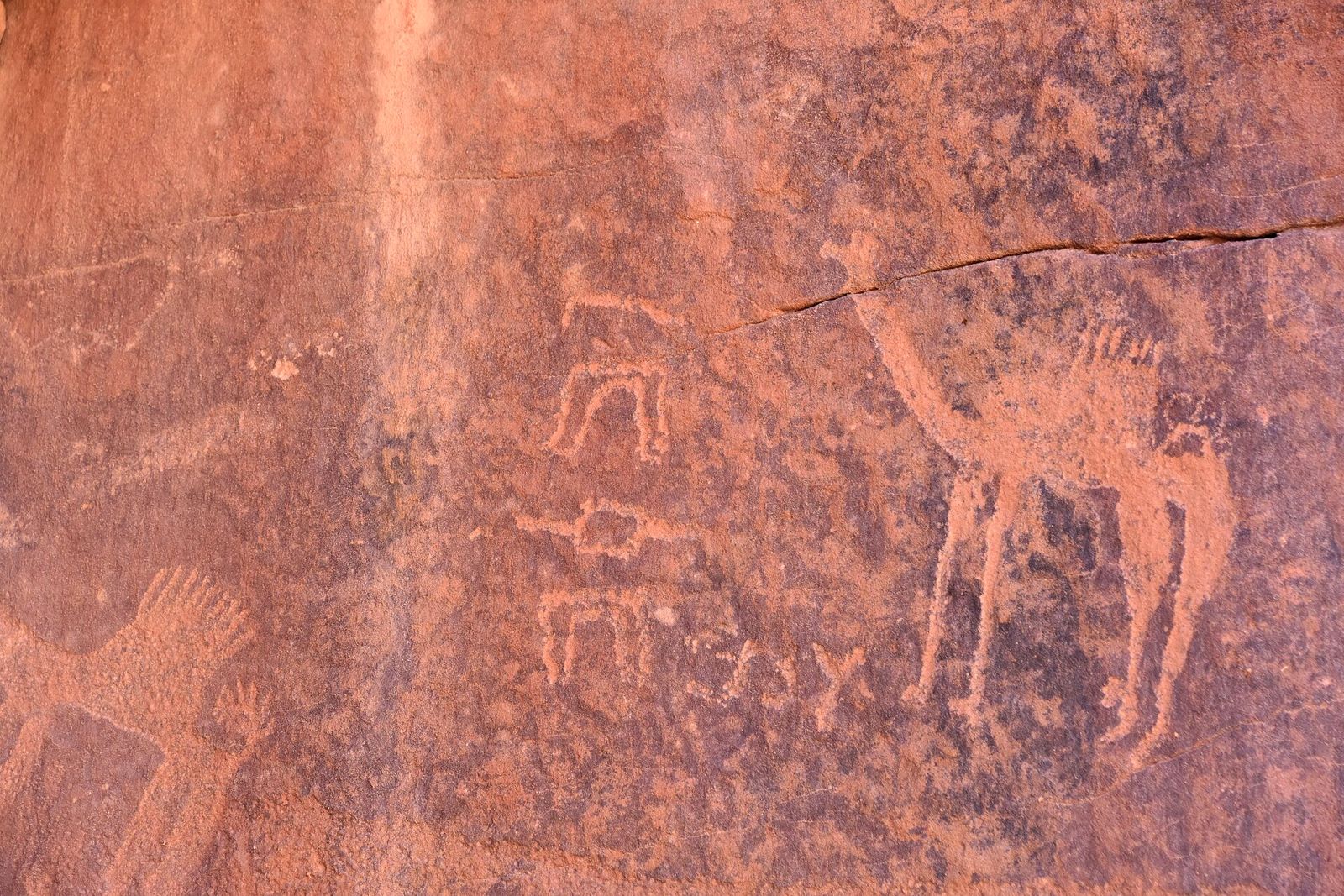
Petroglyphs at JubbahPetroglyphs at Jubbah, Ha'il
Green Arabia

When the desert was green

The Arabian Peninsula has not always been dry. During repeated humid phases, monsoon rains filled lakes and rivers and covered the land with grass. Elephants, hippos, wild cattle and early humans moved through what is now desert.

Footprints preserved by an ancient lake in the Nefud, dated to about 120,000 years ago, are some of the oldest evidence of our species in Arabia. Later, people carved thousands of images into the rocks at Jubbah and Shuwaymis: camels, ibex, hunters with bows and, eventually, early Arabian scripts.

Around 7,000 years ago, communities across the northwest built more than a thousand mustatils: long stone enclosures used for ritual, older than Stonehenge or the pyramids of Egypt.
The caravan age

Incense, trade and desert cities

For more than a thousand years before Islam, camel caravans crossed Arabia carrying frankincense and myrrh from the south to Egypt, the Levant and Rome. Wealthy kingdoms grew up along the way.

Dilmun

From the 3rd millennium BCE, Tarout Island and the eastern coast belonged to the trading world of Dilmun, between Mesopotamia and the Indus Valley.

Dadan & Lihyan

In the AlUla valley, the kingdoms of Dadan and Lihyan left temples, statues and inscriptions, and taxed the passing incense trade.

The Nabataeans

Masters of trade and water engineering, they carved Petra in Jordan and Hegra in Arabia, their great southern city.

Kindah

Qaryat al-Faw, on the edge of the Empty Quarter, was the capital of Kindah, a market town with painted houses and temples.

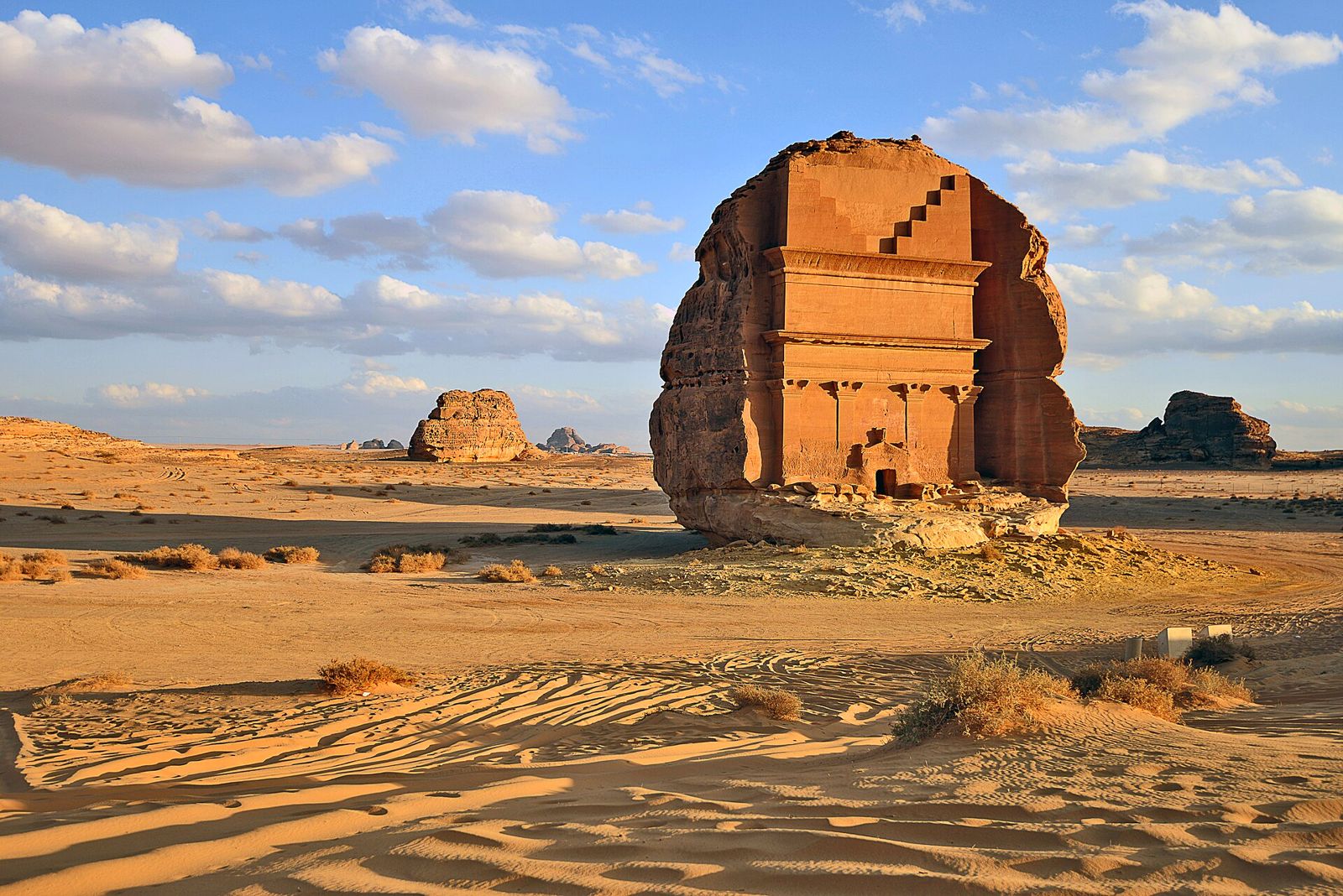
Qasr al-Farid tomb at HegraQasr al-Farid, Hegra
Hegra · 1st century BCE – 1st century CE

The tombs of Hegra

Hegra, also known as Al-Hijr or Mada'in Salih, has more than 100 tombs carved into sandstone outcrops. Their façades, with stepped crowns, eagles and inscriptions, record the names of the families buried inside and the penalties for anyone who disturbed them.

The most famous, Qasr al-Farid ("the lonely castle"), stands alone in the desert and was never finished. In 2008 Hegra became Saudi Arabia's first UNESCO World Heritage Site.

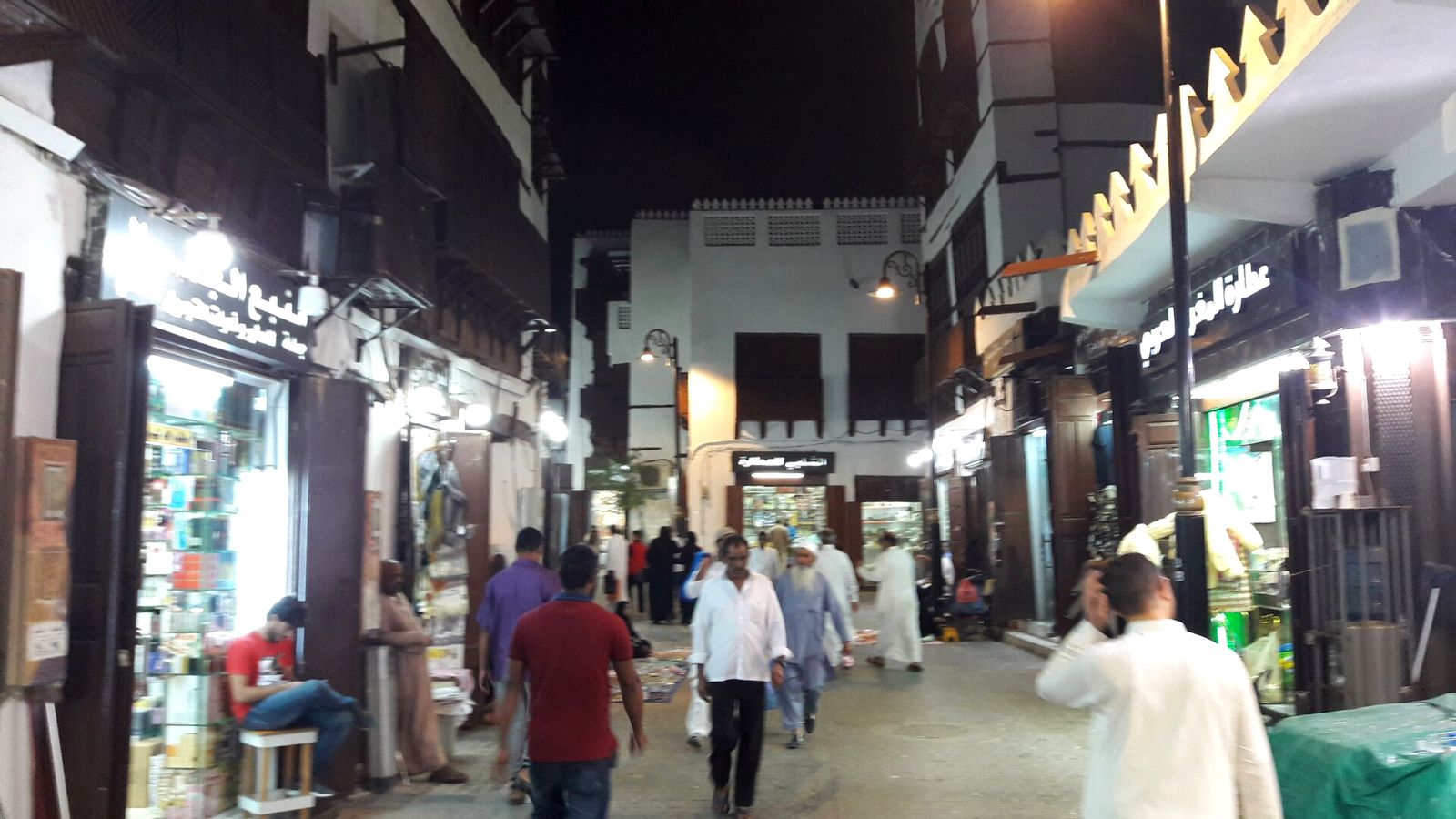
Old JeddahAl-Balad, the old town of Jeddah
7th century onwards

The birthplace of Islam

In about 570 CE the Prophet Muhammad ﷺ was born in Mecca, a trading city in the Hejaz. In 610 he received the first revelation of the Qur'an, and in 622 he migrated to Medina, the event that begins the Islamic calendar.

Within a century Islam had spread from Spain to Central Asia. The capitals of the caliphs moved to Damascus and Baghdad, but Mecca and Medina remained the spiritual heart of the Muslim world, and every year pilgrims crossed the deserts along routes such as the Darb Zubaydah.

Jeddah grew as the port of Mecca, where pilgrims arriving by sea were welcomed into the coral-stone houses of Al-Balad. From 1517 the Ottoman sultans protected the holy cities, while central Arabia, the Najd, was made up of independent towns and tribes. It was there, in the oasis of Diriyah, that the next chapter would begin.