 UNESCO 2008
AlUla, Madinah Region
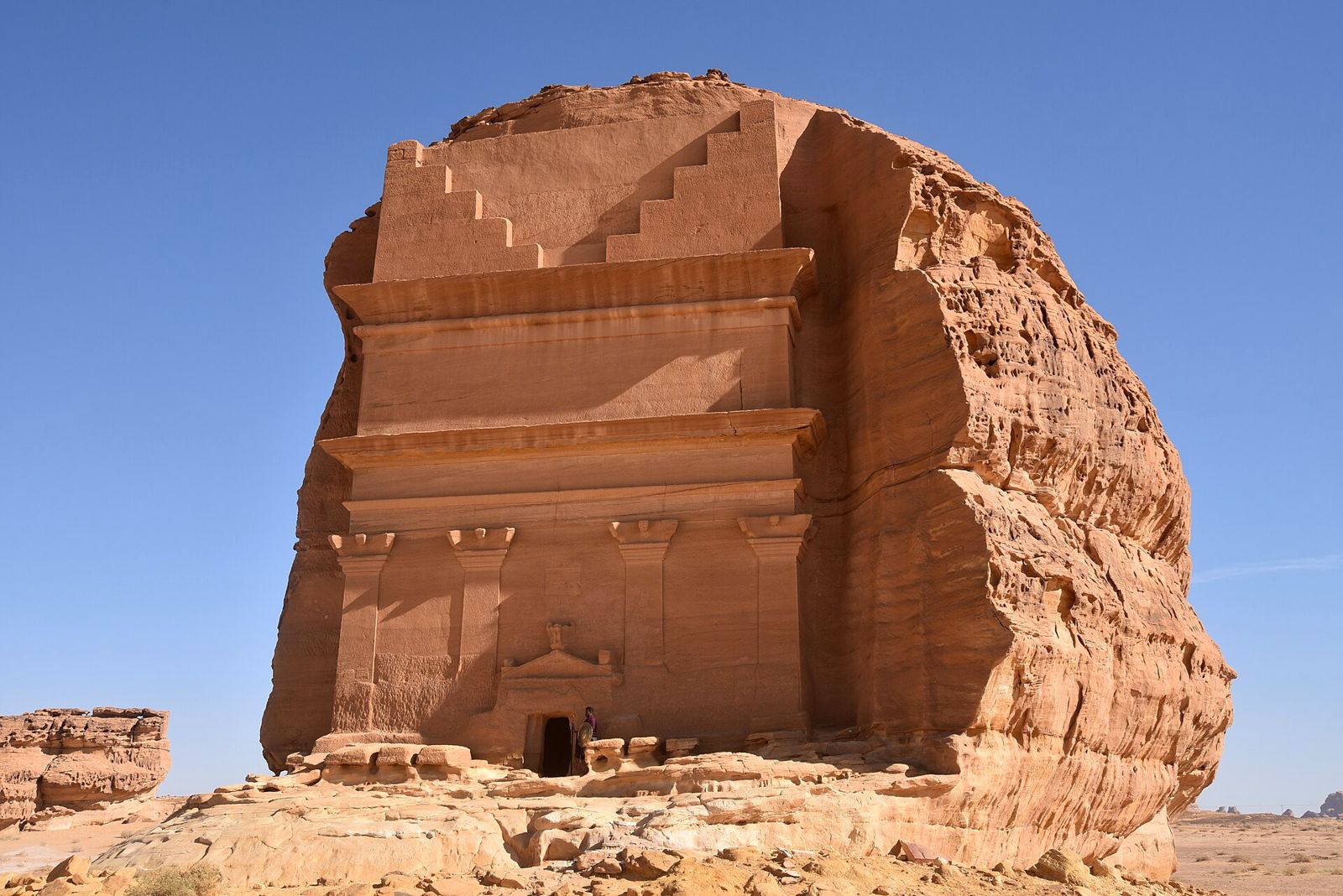
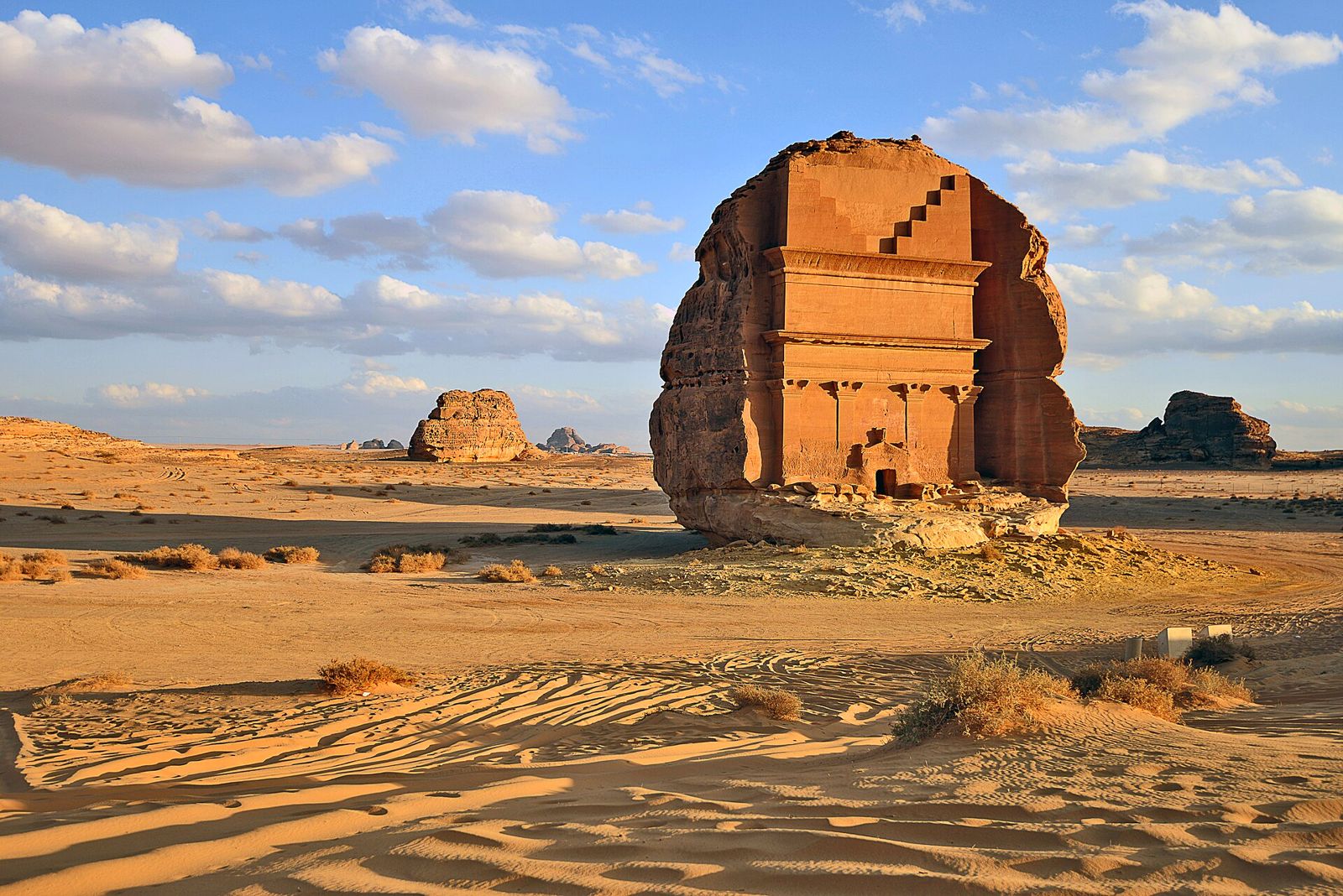
Hegra (Al-Hijr)
The Nabataeans' southern city: over 100 monumental tombs with carved façades, wells and inscriptions from the 1st century BCE to the 1st century CE. The lone tomb of Qasr al-Farid is its icon.
Saudi Arabia's eight World Heritage Sites, together with forts, villages and landscapes that tell the country's story.
Listed in order of inscription, from Hegra in 2008 to Al-Faw in 2025.
UNESCO 2008The Nabataeans' southern city: over 100 monumental tombs with carved façades, wells and inscriptions from the 1st century BCE to the 1st century CE. The lone tomb of Qasr al-Farid is its icon.
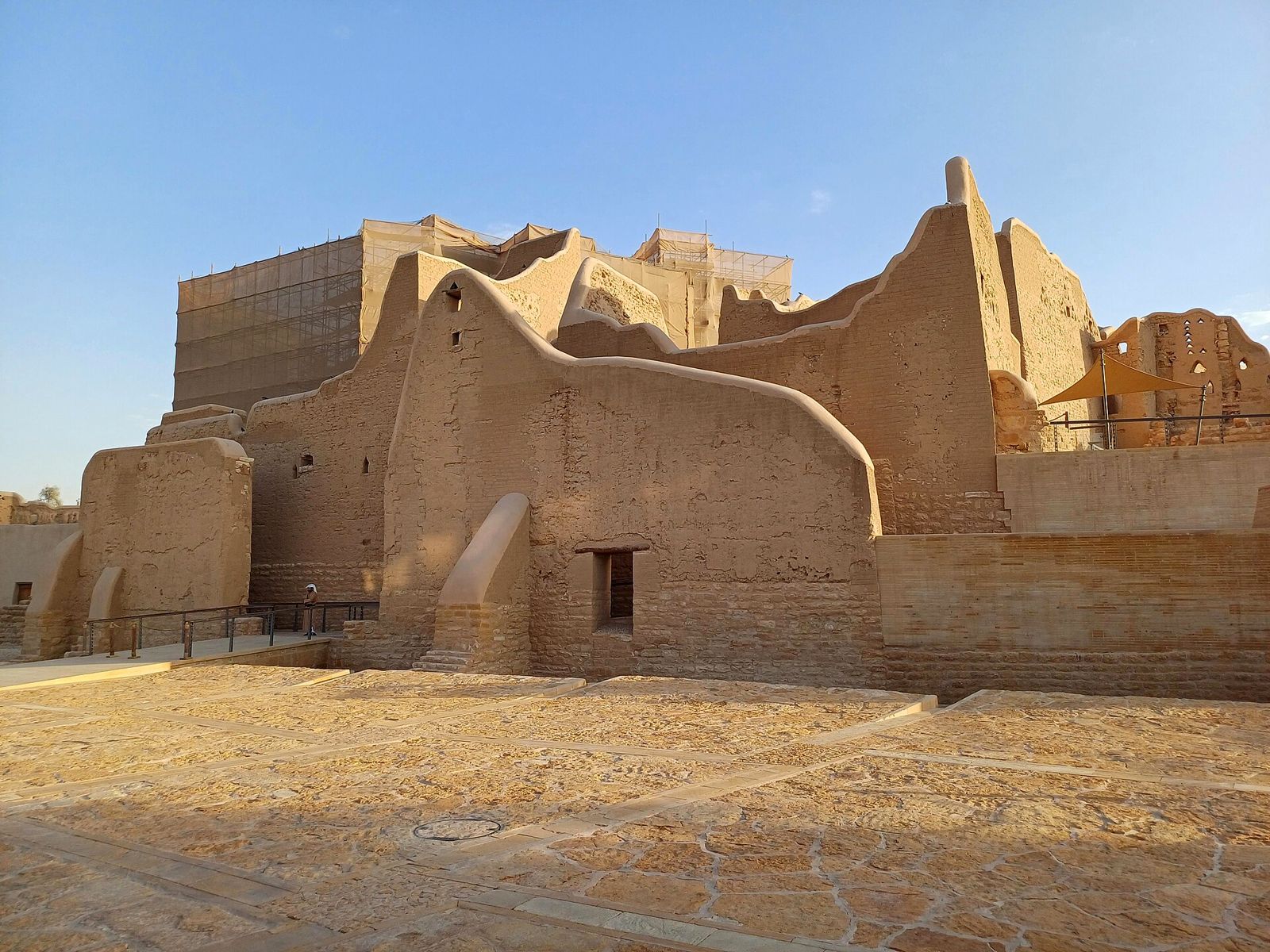 UNESCO 2010
The mud-brick capital of the First Saudi State, built in the Najdi style on the edge of Wadi Hanifah, with palaces, mosques and fortified walls.
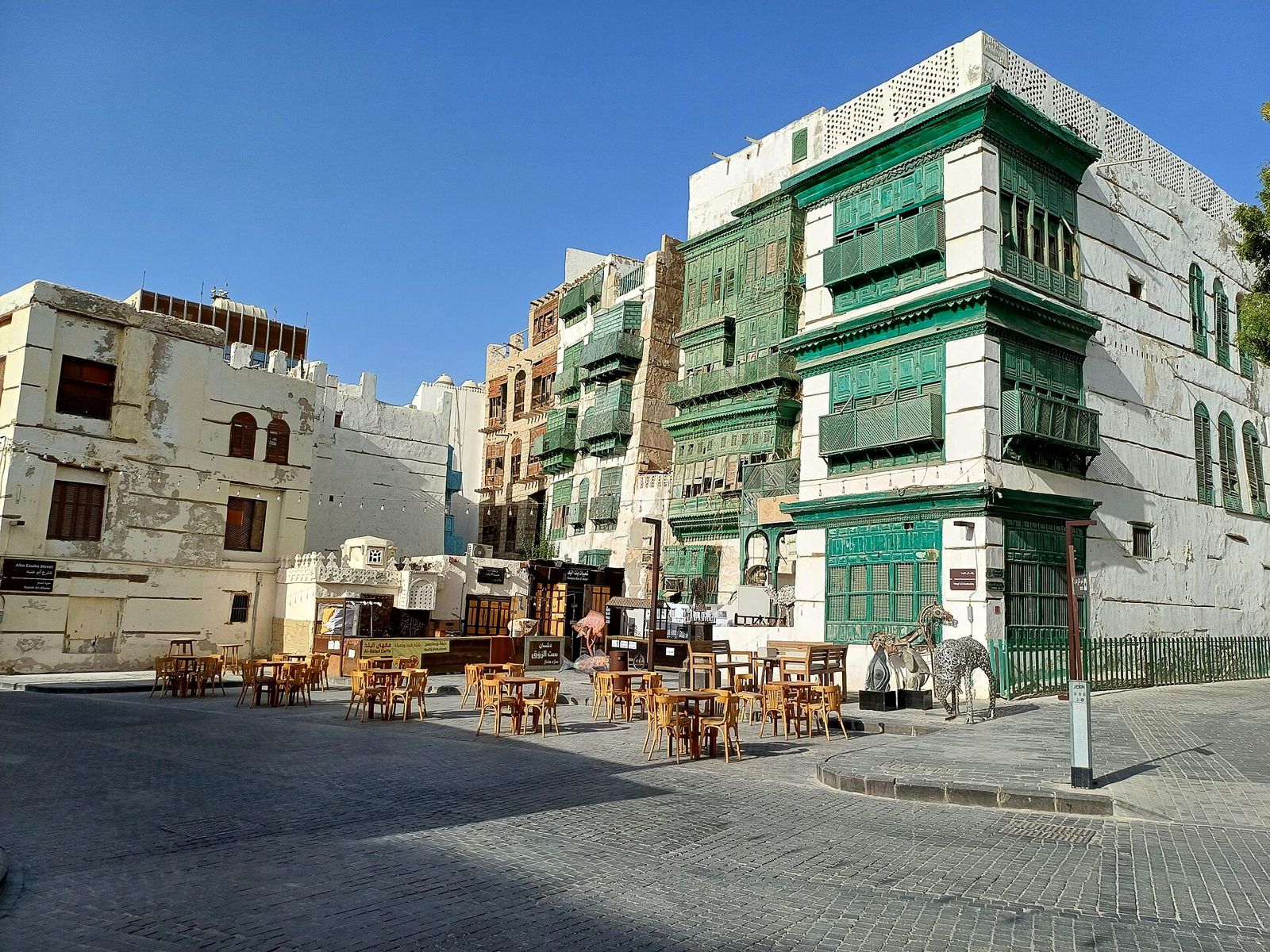 UNESCO 2014
Coral-stone tower houses with wooden rawashin balconies, souks and mosques in Al-Balad, the old port where pilgrims arrived by sea.
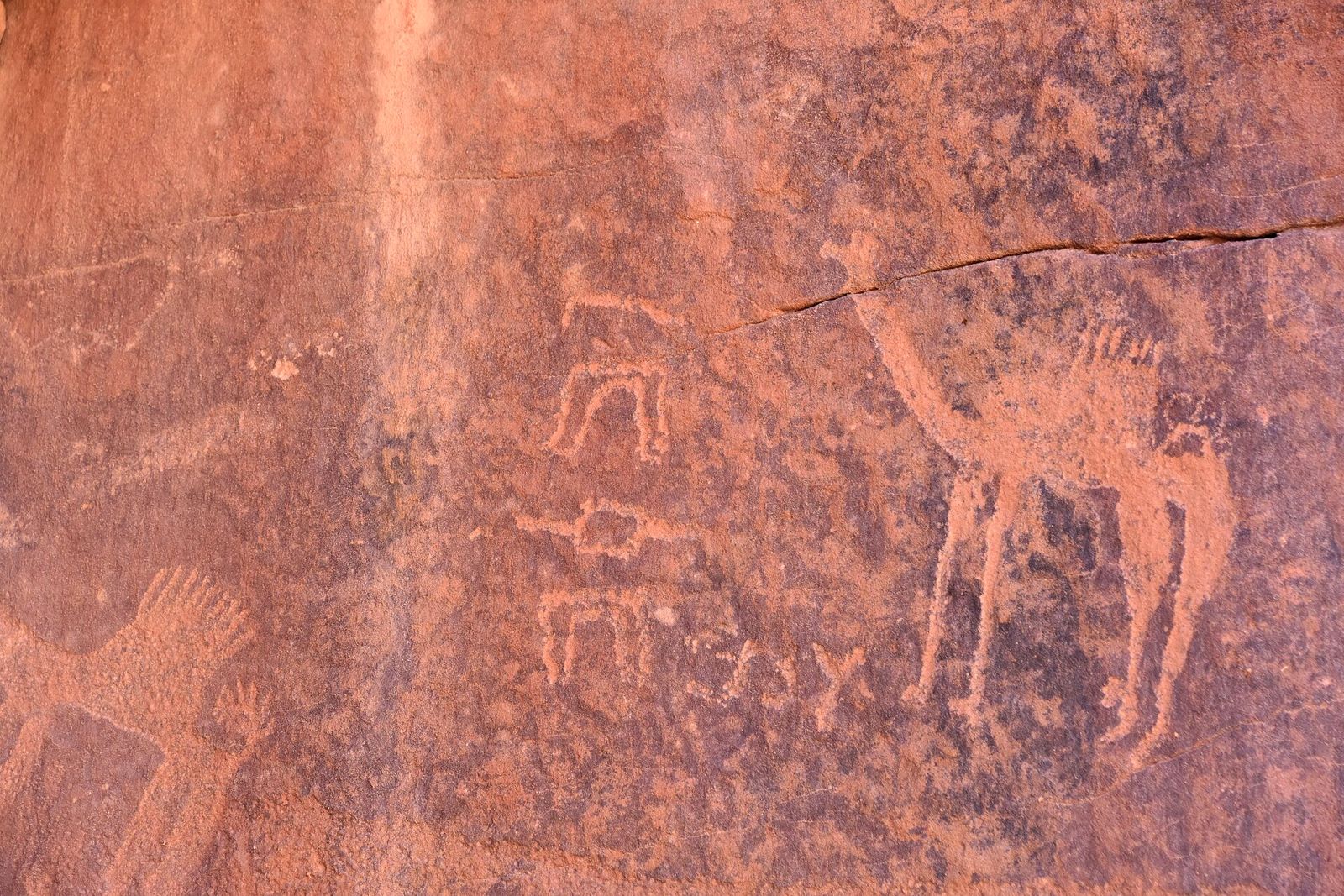 UNESCO 2015
Thousands of petroglyphs and inscriptions spanning about 10,000 years, recording people, animals and changing climates.
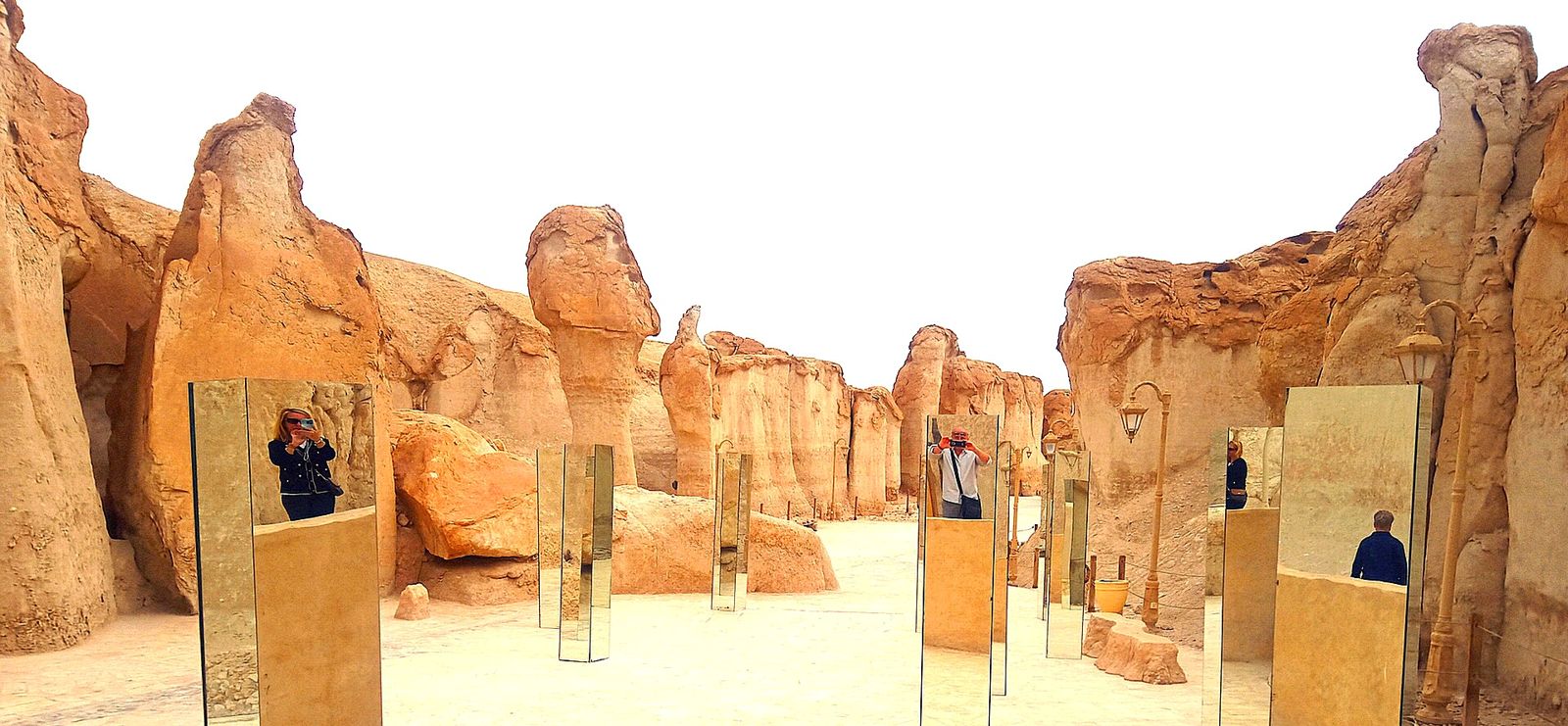 UNESCO 2018
One of the largest oases in the world, with around 2.5 million date palms, springs, canals, historic buildings and the cave-riddled Al-Qarah mountain.
Ancient wells on a desert caravan route, surrounded by a huge collection of rock art and inscriptions left by travellers over 7,000 years.
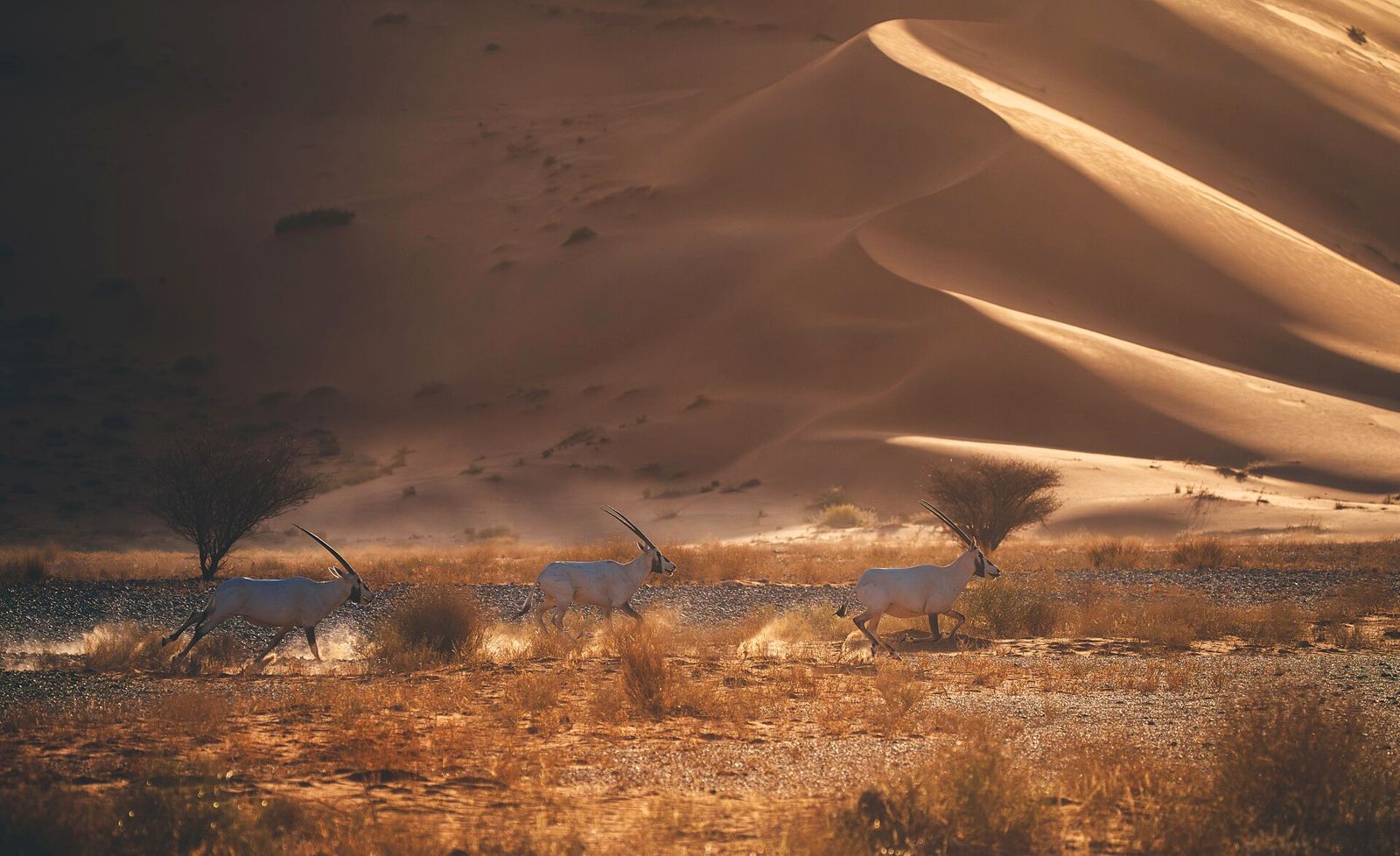 UNESCO 2023
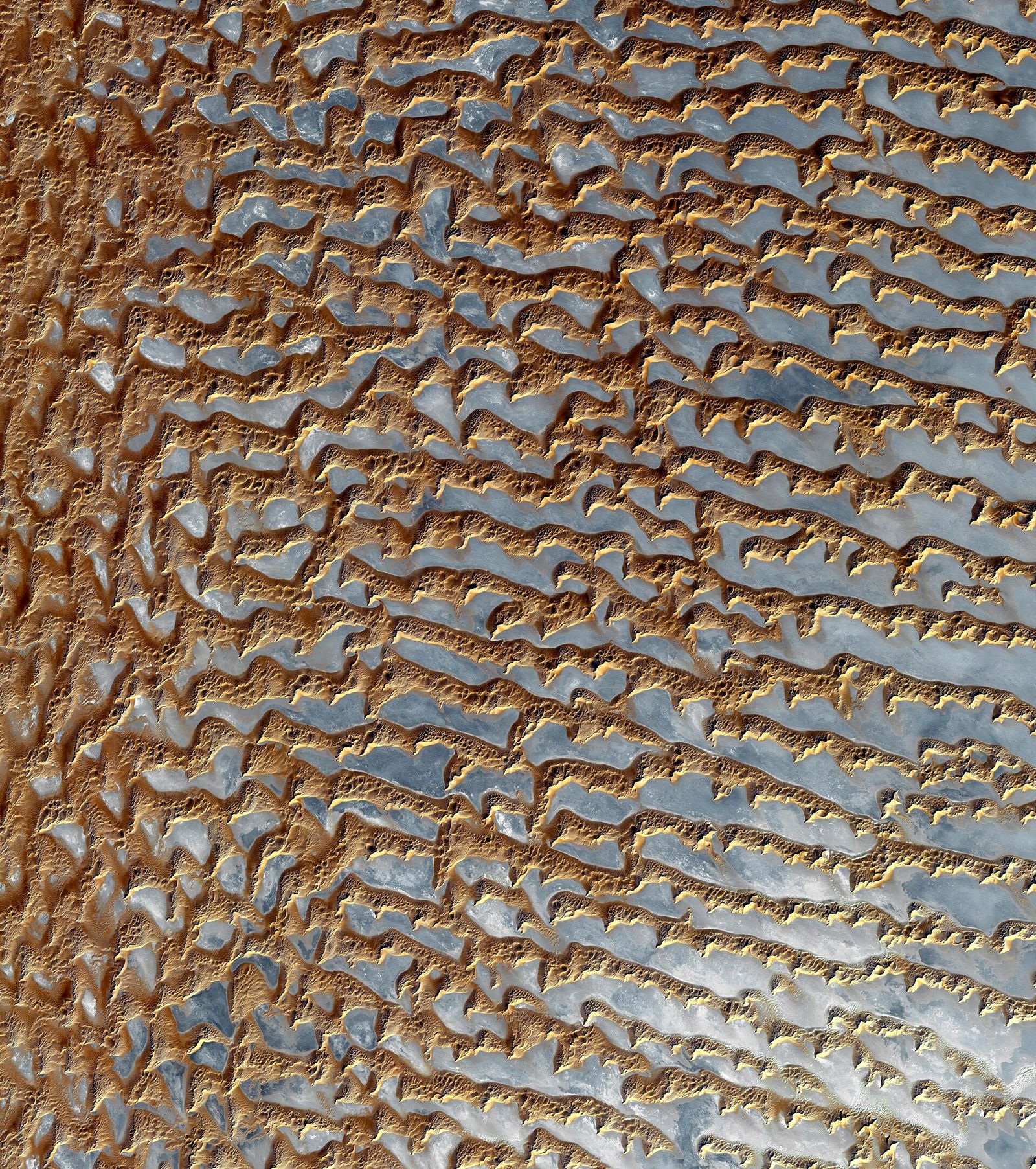
Saudi Arabia's first natural World Heritage Site: towering linear dunes and a refuge for the Arabian oryx and sand gazelle.
The ruins of Qaryat al-Faw, capital of the Kingdom of Kindah: houses, markets, temples, tombs and painted walls on an ancient trade route.
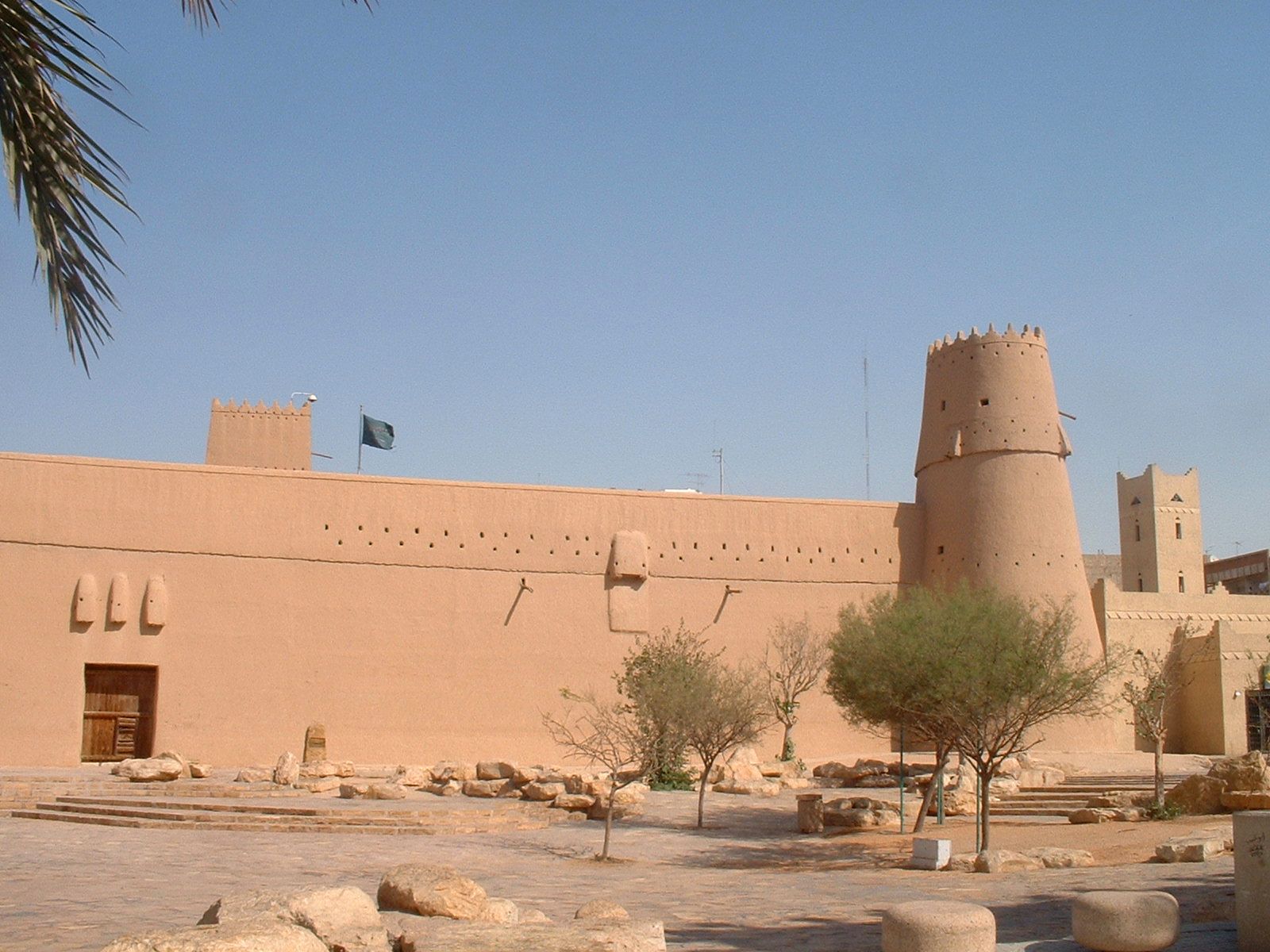
The clay-and-mud-brick fort whose capture in 1902 began the story of modern Saudi Arabia. Today it is a museum.
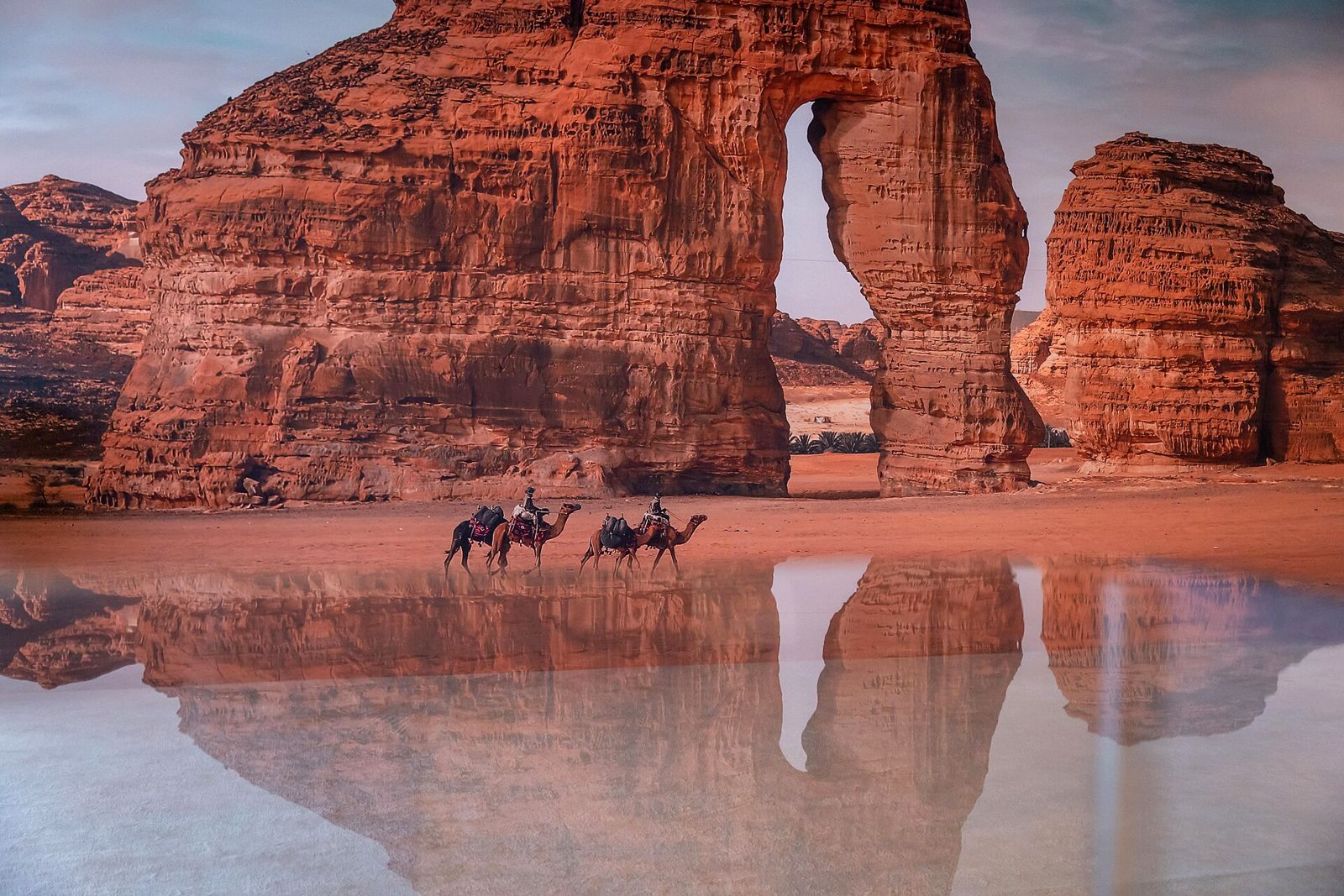
A 52-metre sandstone outcrop sculpted by wind and water into the shape of an elephant.
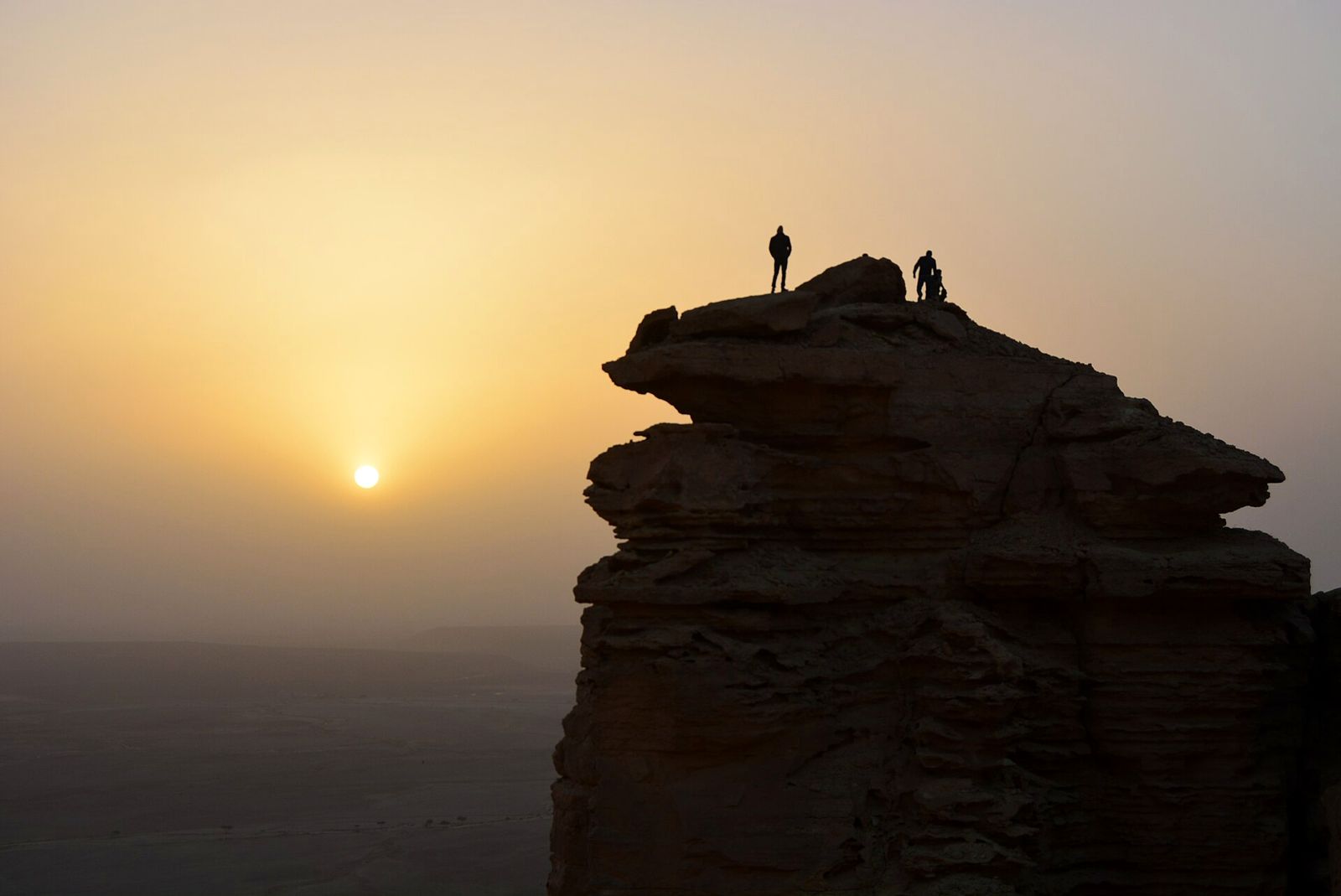
Sheer cliffs of the Tuwaiq escarpment drop away to a vast plain, the bed of an ancient sea.
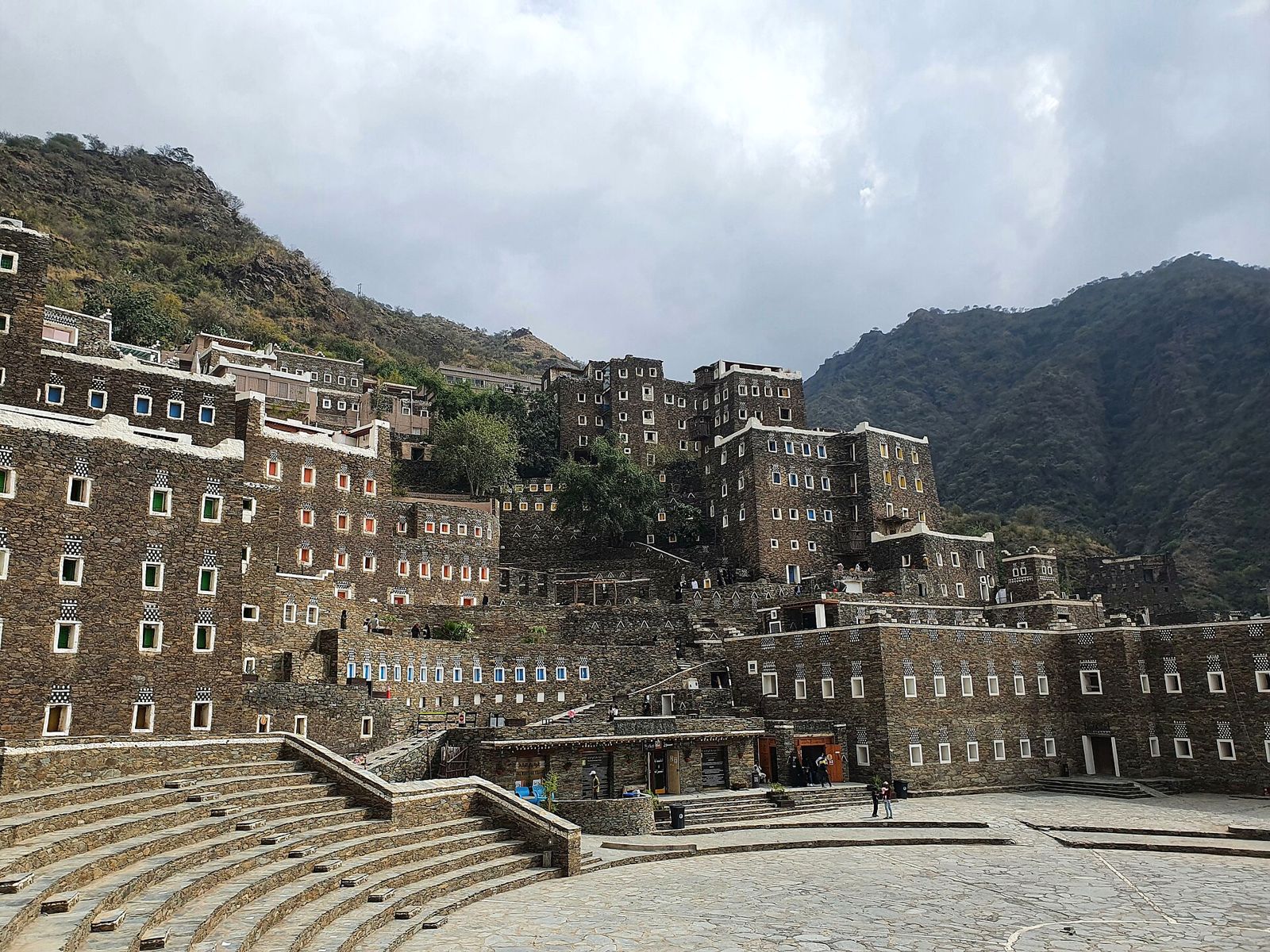
A stone and slate village in the mountains of Asir, once a trading stop between Yemen and the Hejaz.
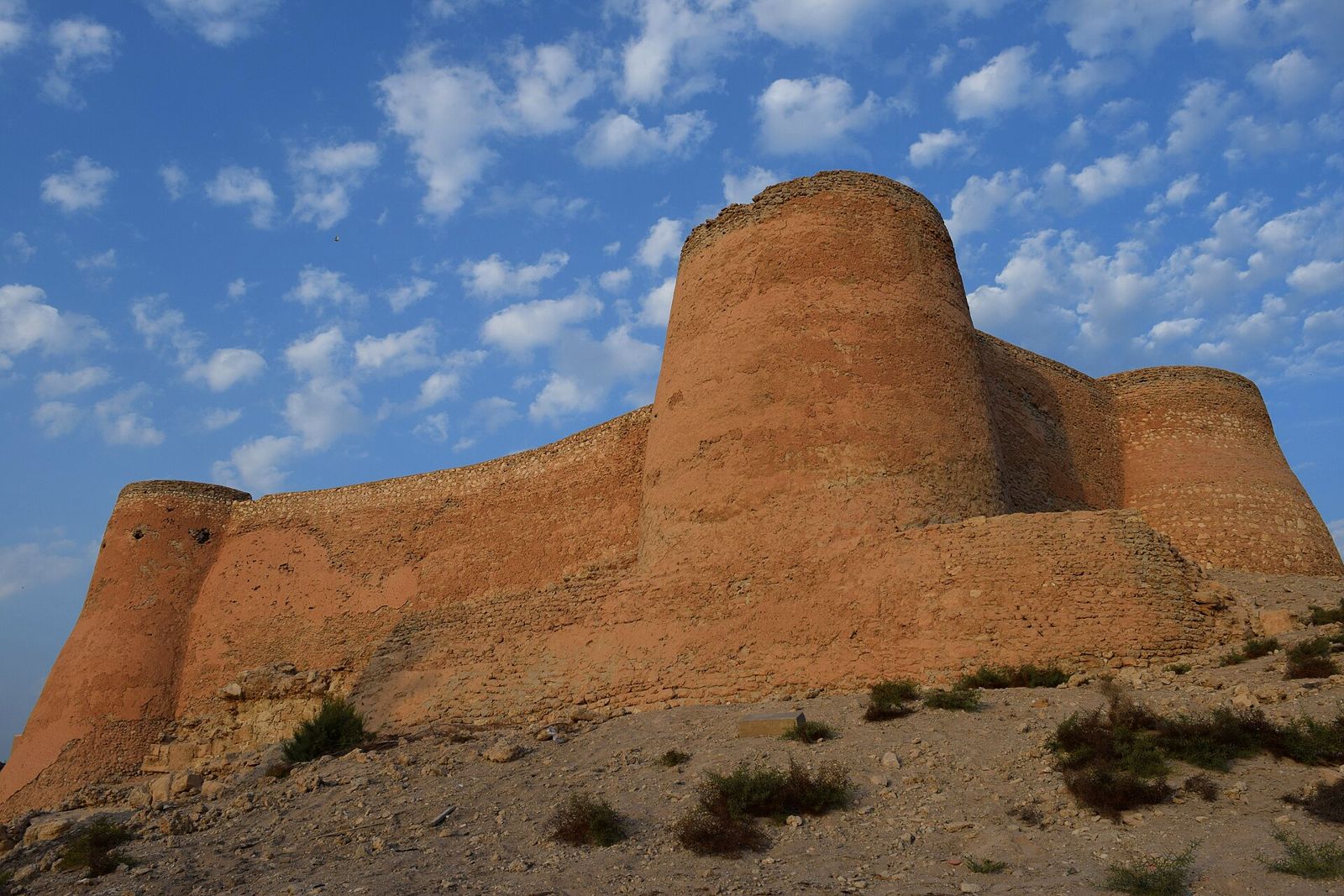
A fort built over one of the oldest settled sites in the Gulf, with roots in the Dilmun era.
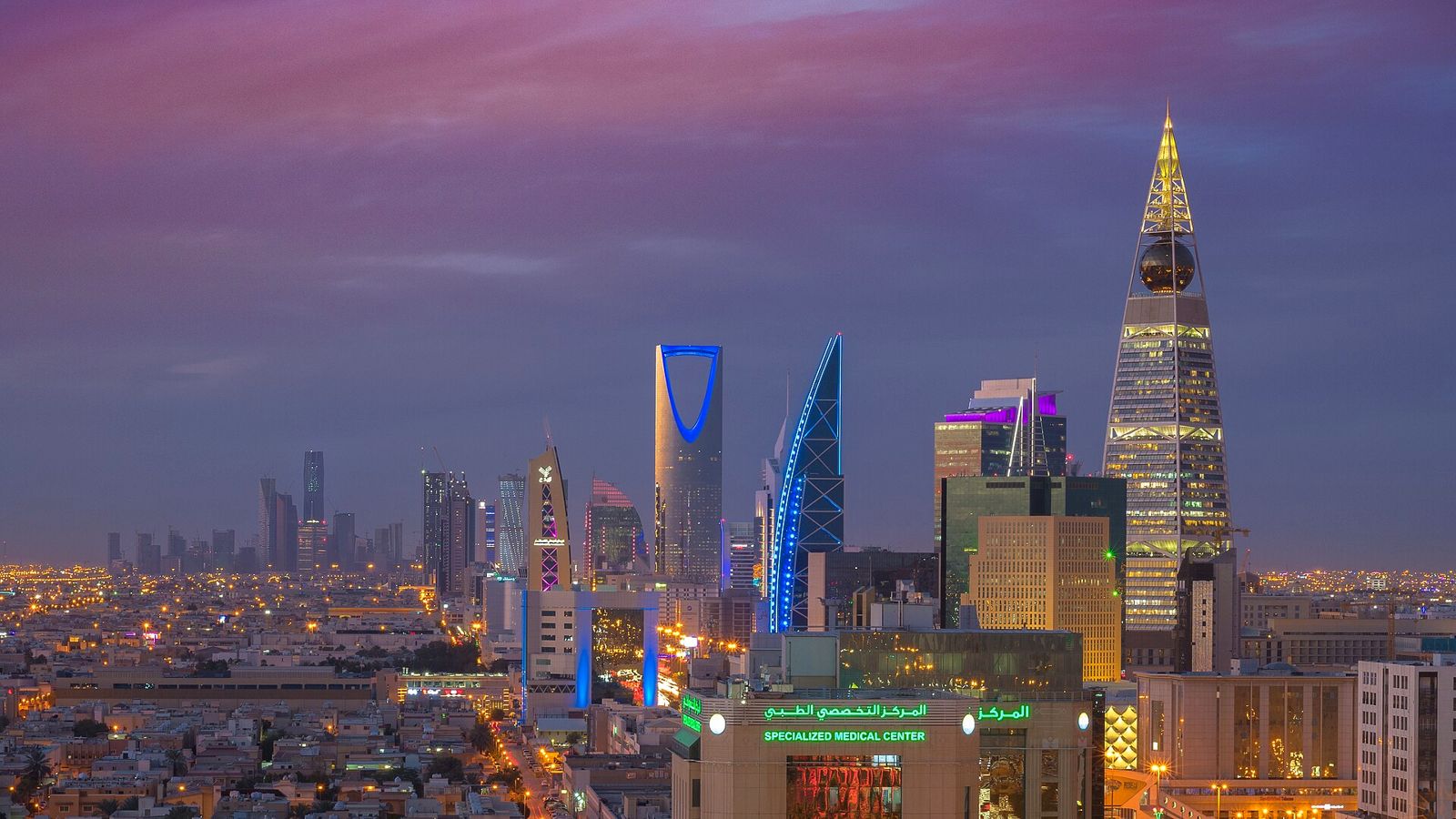
From a walled oasis town to a capital of more than seven million people, with the Kingdom Centre and King Abdullah Financial District on its skyline.
Gold markers are UNESCO World Heritage Sites; green markers are other landmarks. Tap a marker to learn more.
Tap any photo to view it full size.