Choosing who builds your software is one of the most consequential decisions in a project. A good partner can turn a rough idea into a product that earns money; a poor one can burn your budget and leave you with code nobody can maintain. The selection process is difficult because most business owners cannot evaluate code directly, and because every developer and agency describes themselves in similar glowing terms. This guide gives you a practical way to decide without being a technologist.
Start by clarifying what you need
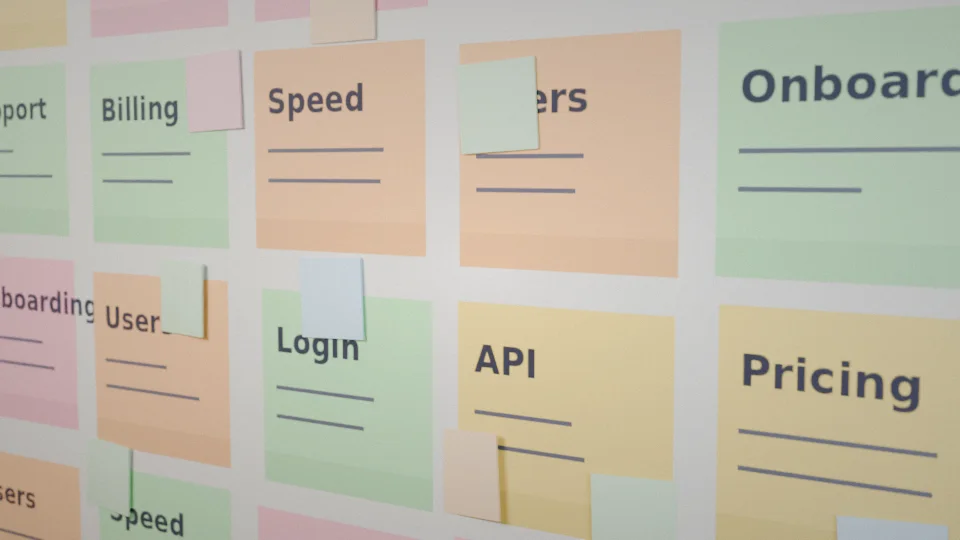
Before speaking to anyone, write down the problem you want to solve, who will use the system, what success looks like, your rough budget and timeline, and what you already have (designs, data, systems to integrate). You do not need a technical specification; a one-page description with goals and constraints is enough. The clearer your brief, the better the quality of proposals and the easier to compare them. If you are unsure, an initial discovery engagement is a wise, low-risk way to shape scope; see our discovery phase article.
Freelancer, in-house developer or agency?
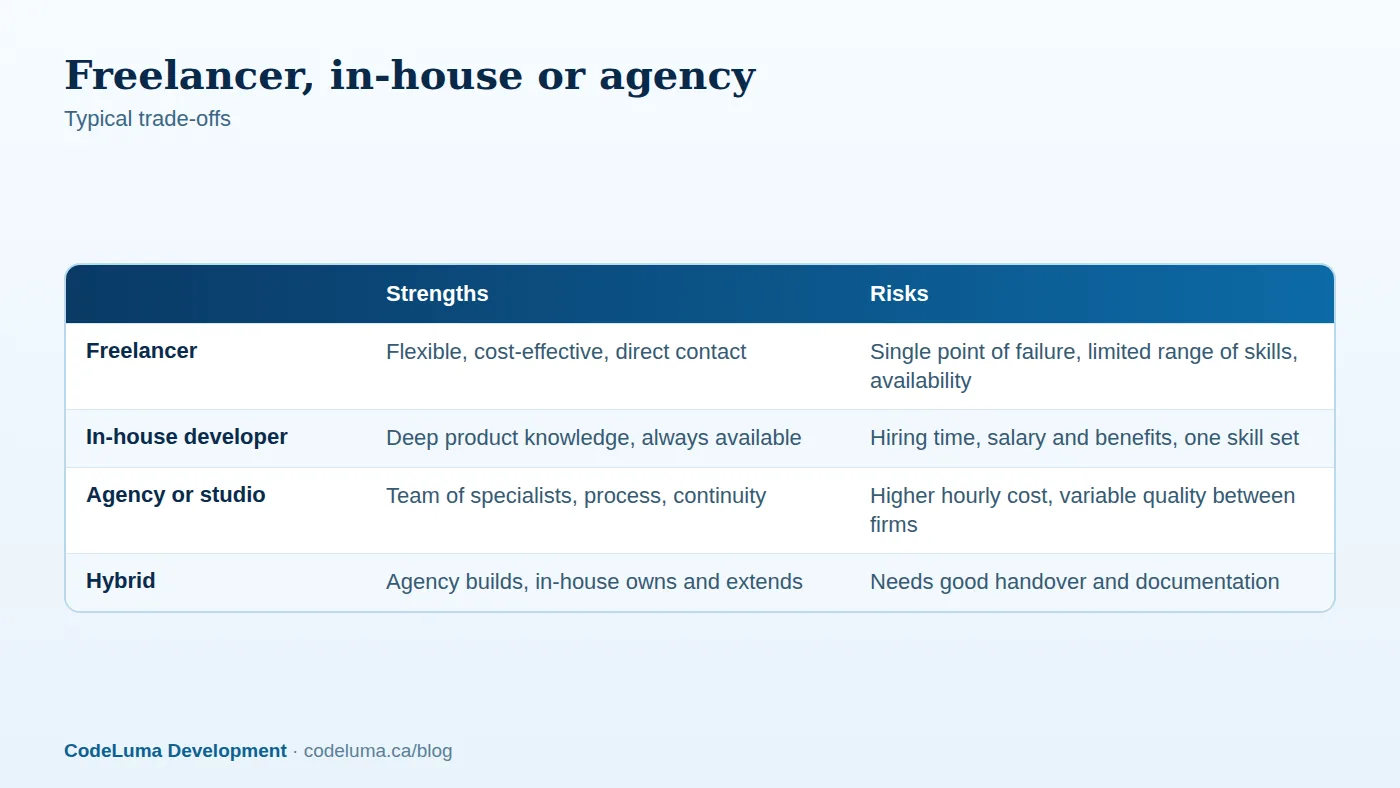
A freelancer suits well-defined, smaller projects and can be excellent value, but you depend on one person's skills and availability. An in-house developer makes sense when you have continuous work and want deep product knowledge, though one hire rarely covers design, front-end, back-end, infrastructure and security. An agency or studio brings a team, process and continuity, useful for larger builds, tight timelines or when you need several specialisations; check that the people you meet are the people who will do the work. Many businesses combine models: an agency builds and hands over to an internal person, or a freelancer handles maintenance. See also our article on long-term technical partnerships.
What "full-stack" really means
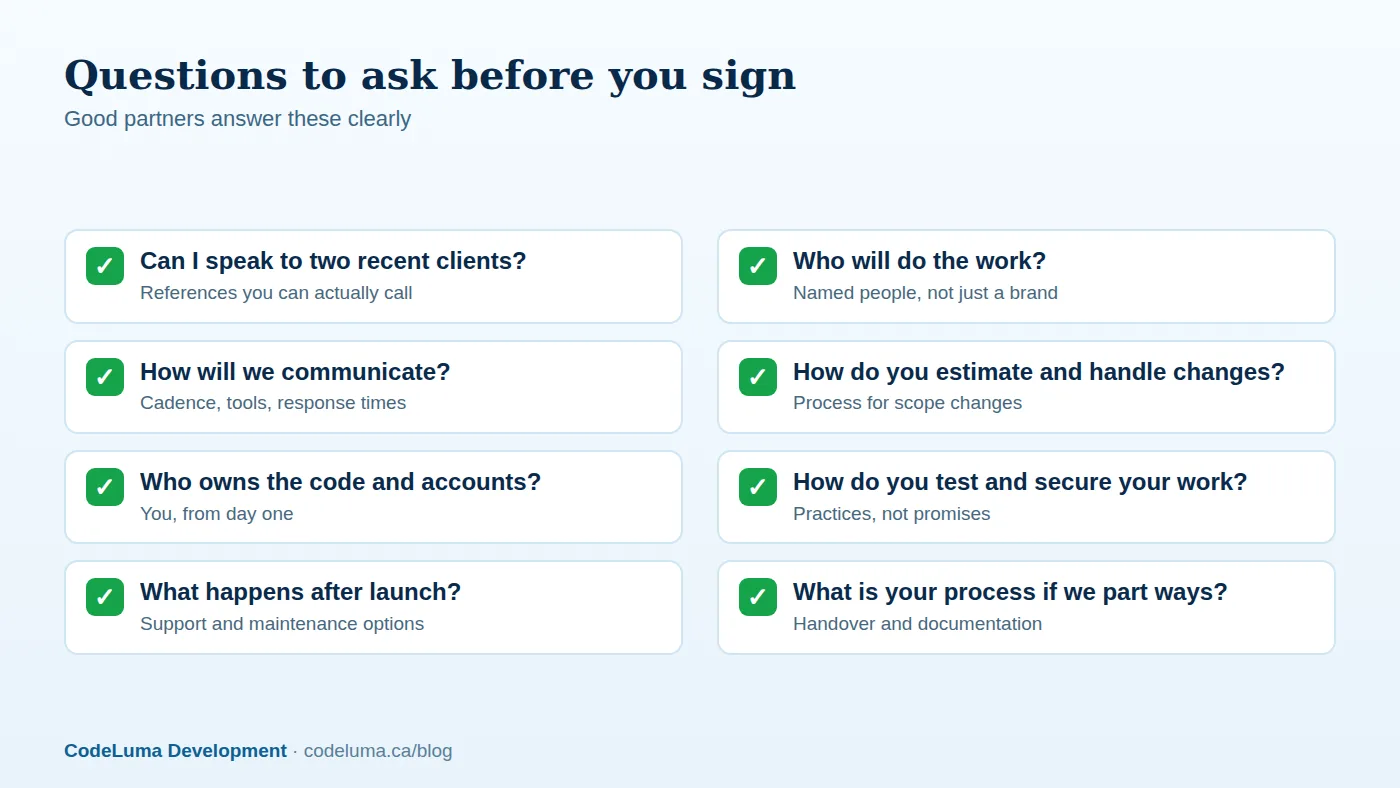
A full-stack developer works on both the visible interface (front end) and the server, database and infrastructure (back end). Genuine full-stack skill is real but has limits: few individuals are equally strong at everything, and complex products benefit from specialists in security, performance, design and operations. When someone claims full-stack ability, ask where they are strongest and how they handle their weaker areas.
Evidence of quality to look for
- Relevant, live work. Look at real products they have built, use them and check speed, mobile behaviour and polish. Ask what role they personally played.
- Similar problems solved. Experience with your type of project (subscriptions, marketplaces, integrations, dashboards) reduces risk.
- References you can call. Speak to at least two recent clients. Ask about communication, honesty when things went wrong, whether budgets and deadlines held and whether they would hire again.
- Reviews and track record over time, read critically. Long-term client relationships are a good sign.
- Clear, plain-language communication. If they cannot explain a technical choice in words you understand, that will not improve later.
- Sensible technology choices. Mainstream, well-supported tools suit most businesses; be wary of exotic stacks chosen for novelty, since they make future maintenance harder; see our architecture article.
Look at how they work, not only what they build
Good delivery is a process. Ask about:
- Discovery and scoping: do they ask probing questions about your users and goals before quoting? See how to scope an MVP.
- Estimation: how they arrive at numbers and how they handle uncertainty; see how we estimate projects.
- Delivery rhythm: short iterations with demonstrations you can see, not a long silence followed by a launch; see our communication article.
- Quality practices: version control, code review, automated testing and deployment pipelines (CI/CD).
- Security awareness: how they handle authentication, data protection, secrets and dependency updates (security audit guide, secrets).
- Documentation and handover: can another developer take over?
- Use of modern tools: including AI-assisted development with proper review; see our article on AI assistants.
Ownership and access: non-negotiable
You should own the source code, designs, domain names, hosting accounts, third-party accounts and data from the beginning. Insist on the following: the code in a repository under your organisation's account (or one you can access and transfer immediately); hosting, domains and services registered in your name; credentials shared securely and rotated at handover; and clear written intellectual property terms in the contract, including any third-party or open-source components and their licences. The same principles protect you if a relationship ends; see our note on protecting your intellectual property. A partner who holds your assets hostage is a partner to avoid.
Contracts and pricing
Understand the pricing model and what it means for risk: fixed price gives budget certainty for well-defined scope but discourages change; time and materials gives flexibility but needs oversight; retainers suit ongoing work. We compare them in fixed-price versus time-and-materials. Whatever the model, the agreement should define scope and deliverables, milestones and payments tied to delivered work, how changes are handled, acceptance criteria, warranty for defects after launch, confidentiality, data protection responsibilities, and termination and handover terms. Have a lawyer review contracts of significance. Beware of very low quotes; they often reflect misunderstanding, corner-cutting or a plan to recover margin through change requests.
Compare proposals fairly
- Give every candidate the same brief and the same opportunity to ask questions.
- Compare scope line by line; a cheaper quote may exclude testing, security, hosting setup, training or documentation.
- Score on the criteria that matter: relevant experience, communication, process, references, price and cultural fit.
- Consider a small paid pilot or discovery project to see them work before committing to a large one.
- Trust your experience of the sales conversation: responsiveness, honesty about limits and willingness to say "we are not the right fit" are strong positive signs.
Technical due diligence without being technical
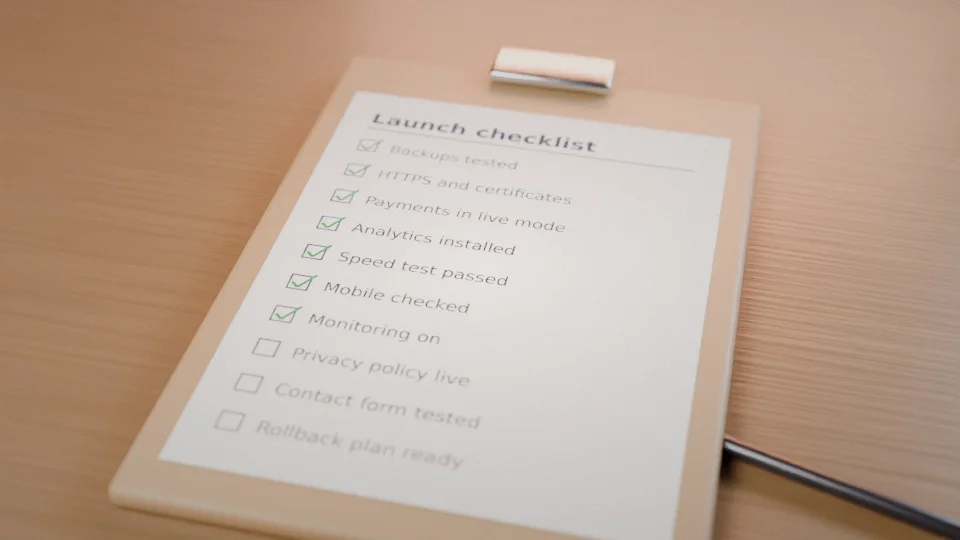
If the project is significant, consider paying an independent technical adviser for a few hours to review proposals and architecture, or to inspect delivered code. Ask for a demonstration of the working software each iteration, access to a staging site, and evidence such as test results and deployment logs. Look for a live example of monitoring and backups: professionals can show you their approach in minutes.
Red flags
We list more in our red flags article. In short: refusal to provide references, vague answers about who does the work, pressure to sign quickly, promises of unrealistic speed or price, no questions about your business, reluctance to give you code and account ownership, no testing or security practices, and a portfolio they cannot demonstrate or explain.
Plan for the relationship after launch
Software needs continuing care; see our retainer article. Ask what support and maintenance options exist, response times, and how knowledge is preserved. Consider whether the partner can grow with you, taking on new features, integrations and scaling, as described in our post-launch article.
The right partner listens carefully, tells you uncomfortable truths early, delivers in visible steps and leaves you in control of what you own. Our software team works this way, and we are happy to walk you through our process, introduce past clients and offer a paid discovery phase; start a conversation. Our support and maintenance teams continue the relationship after launch.
Put this into practice with CodeLuma
CodeLuma is a transparent, accountable development partner: clear scoping, fixed communication rhythm, full code and account ownership for you, and references you can call.
- Custom software development - tailored systems, integrations and internal tools.
- Website and web application development - fast, accessible, search-friendly builds.
- CodeLuma support - help from a real team when you need it.
- Maintenance and support plans - updates, monitoring and ongoing improvement.
Start a conversation. Tell us about your project and we will reply with practical next steps, or browse all CodeLuma services. CodeLuma Development Inc. is a Canadian company that works with teams in Windsor, Essex, London, Toronto, Mississauga and across Ontario, throughout Canada and remotely.