Launch day feels like the finish line, and that is the most expensive misconception in software. Applications live in a changing world: libraries release security fixes, browsers and operating systems update, payment and email providers change their APIs, customers ask for improvements and traffic grows. Software that is left alone does not stay the same; it decays. A maintenance retainer is a way of paying a small, steady amount to keep it healthy instead of paying a large, urgent amount when it breaks.
Why software needs continual care
- Security. New vulnerabilities in frameworks and dependencies are published constantly. Unpatched systems are the easiest targets; see our security audit guide and our web vulnerabilities article.
- Dependencies and platforms end support. Language versions, frameworks and databases reach end of life, after which they receive no security fixes. Upgrading late is far costlier than upgrading steadily.
- External services change. Payment gateways, shipping APIs, social logins and email services alter or retire their interfaces; see our integration article.
- Infrastructure drifts. Certificates and domains expire, disks fill, backups silently fail; see our DNS and SSL article and our backup article.
- Usage evolves. More data and more users expose performance limits; see database optimisation.
- Business changes. Products, prices, processes and regulations change, and software must follow.
Industry rules of thumb often put annual maintenance at fifteen to twenty percent of the original build cost, and that figure is a starting point, not a promise. Applications that are old, complex or critical need more.
What a good retainer includes
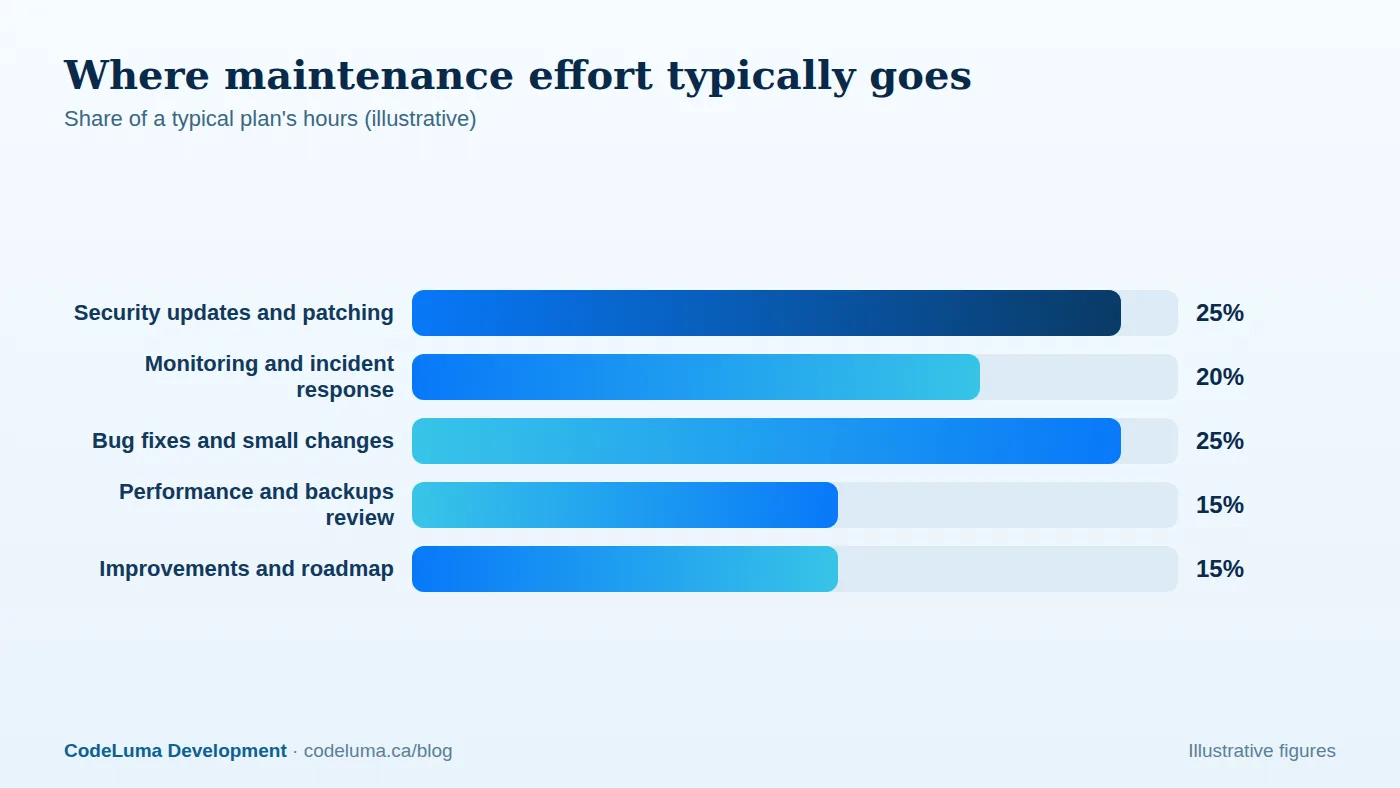
- Proactive updates. Regular patching of the framework, libraries, server software and plugins, tested in staging before release.
- Monitoring and alerting. Uptime, errors, performance, certificates and domains, with a human who responds; see our monitoring guide.
- Backups and recovery. Automated backups with periodic restore tests.
- Bug fixing. A defined allowance of hours for defects and small changes.
- Support. A clear channel and response times for your team, and sometimes your customers.
- Performance and security reviews. Scheduled check-ups with written findings.
- Improvements. A monthly slice for enhancements from a prioritised roadmap.
- Reporting. A short monthly summary of what was done, what was found and what is recommended.
Retainer versus one-off projects
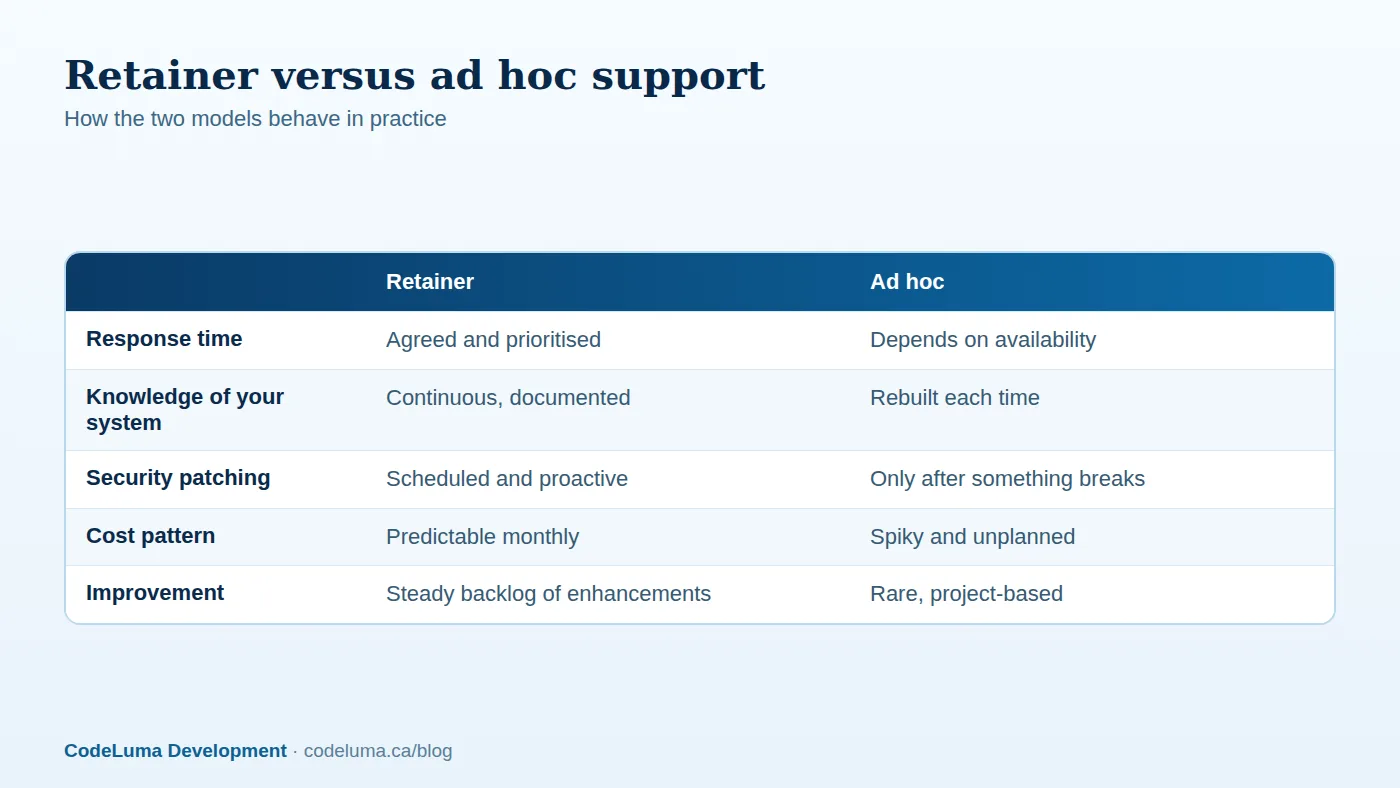
Ad hoc support looks cheaper because you pay only when something goes wrong. In practice the costs surface elsewhere: emergency rates, longer downtime while someone gets up to speed, deferred updates that accumulate into a risky, expensive upgrade project, and knowledge lost between engagements. A retainer with people who know your system means faster diagnosis, safer changes and continuity. It also smooths your budget: a fixed monthly amount instead of unpredictable invoices. One-off projects remain the right tool for large, well-defined initiatives, such as a new module or a redesign; a retainer complements them by keeping the foundation sound and providing a channel for the small, continuous improvements that compound.
Retainer models
- Fixed-scope maintenance. A set list of activities (updates, monitoring, backups) for a fixed fee. Predictable, and good for stable applications.
- Hours bank. A monthly block of engineering hours used for fixes, changes and improvements, with reporting and possibly rollover rules.
- Hybrid. A base fee for monitoring and patching plus an hours bank for change work.
- Dedicated capacity. A named engineer or small team for a fraction of their time; best for products in active growth. See our article on long-term technical partnerships.
What to look for when comparing plans
- Clear service levels: response and resolution times by severity, and hours of coverage.
- Transparency: what is included, what is billed extra, and how emergencies are handled.
- Named people and continuity, not a rotating queue.
- Documentation and access: you own the repository, servers, domains and credentials, and can leave at any time.
- Security practice: access control, secret handling and data protection consistent with our secrets guide.
- Reporting and reviews so you can see value delivered.
- Fair terms: reasonable notice periods, no lock-in via proprietary tooling.
See also our red flags article and how to choose a developer or agency for evaluating providers.
Budgeting
Estimate from the application's complexity and criticality. A small marketing site or simple app may need only a modest monthly plan covering updates, backups and monitoring. A transactional system with integrations, personal data and revenue at stake needs more, including security testing and capacity planning. Add hosting and third-party service costs, which are separate. Review the plan annually against actual usage: unused hours may signal the plan is too large or that the roadmap is stalling, and constant overruns signal the opposite. Compare pricing models in our fixed-price versus time-and-materials article.
Measuring the value
- Uptime and incident counts, and time to detect and resolve.
- Patch currency: how many known vulnerabilities and outdated components remain.
- Number of emergencies versus planned changes.
- Page speed and error rates over time.
- Backup and restore test results.
- Roadmap items delivered and their business impact.
The best sign of a working retainer is that nothing dramatic happens: no midnight outages, no frantic upgrades, and a steady stream of small improvements.
Getting started
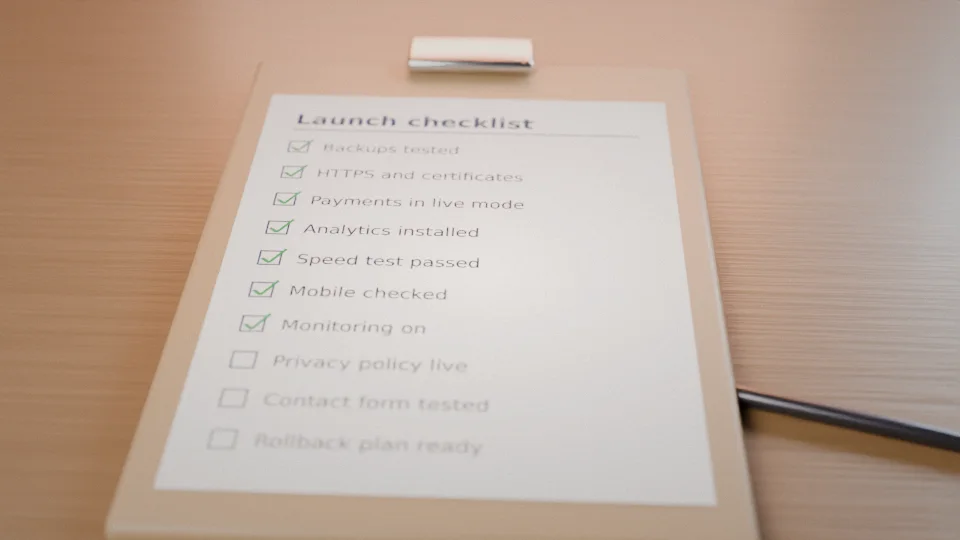
Begin with an assessment of the current state: versions, vulnerabilities, backups, monitoring and documentation. That produces a prioritised list and a sensible plan. Our maintenance plans are built around exactly that, with clear service levels, monthly reporting and engineers who know your system; you can also reach our support team directly for urgent questions, and our hosting service bundles the servers, monitoring and backups underneath.
Put this into practice with CodeLuma
CodeLuma maintenance and support plans keep your software patched, monitored, backed up and improving every month, with named engineers who already know your system.
- Maintenance and support plans - updates, monitoring and ongoing improvement.
- CodeLuma support - help from a real team when you need it.
- Custom software development - tailored systems, integrations and internal tools.
- Managed hosting - monitored, backed-up, Canadian-friendly hosting.
Start a conversation. Tell us about your project and we will reply with practical next steps, or browse all CodeLuma services. CodeLuma Development Inc. is a Canadian company that works with teams in Windsor, Essex, London, Toronto, Mississauga and across Ontario, throughout Canada and remotely.