Technical debt is a metaphor for the future cost of choices made today to save time. Like financial debt, some of it is smart: a deliberate shortcut to meet a real deadline, with a plan to pay it back, can be the right call. But most debt is not deliberate. It accumulates through rushed releases, missing tests, copy-pasted code, outdated libraries and undocumented decisions. The interest is paid every day in slower features, surprise outages and frustrated teams. Because the payments are spread thin, business owners rarely see the total. This article makes it visible.
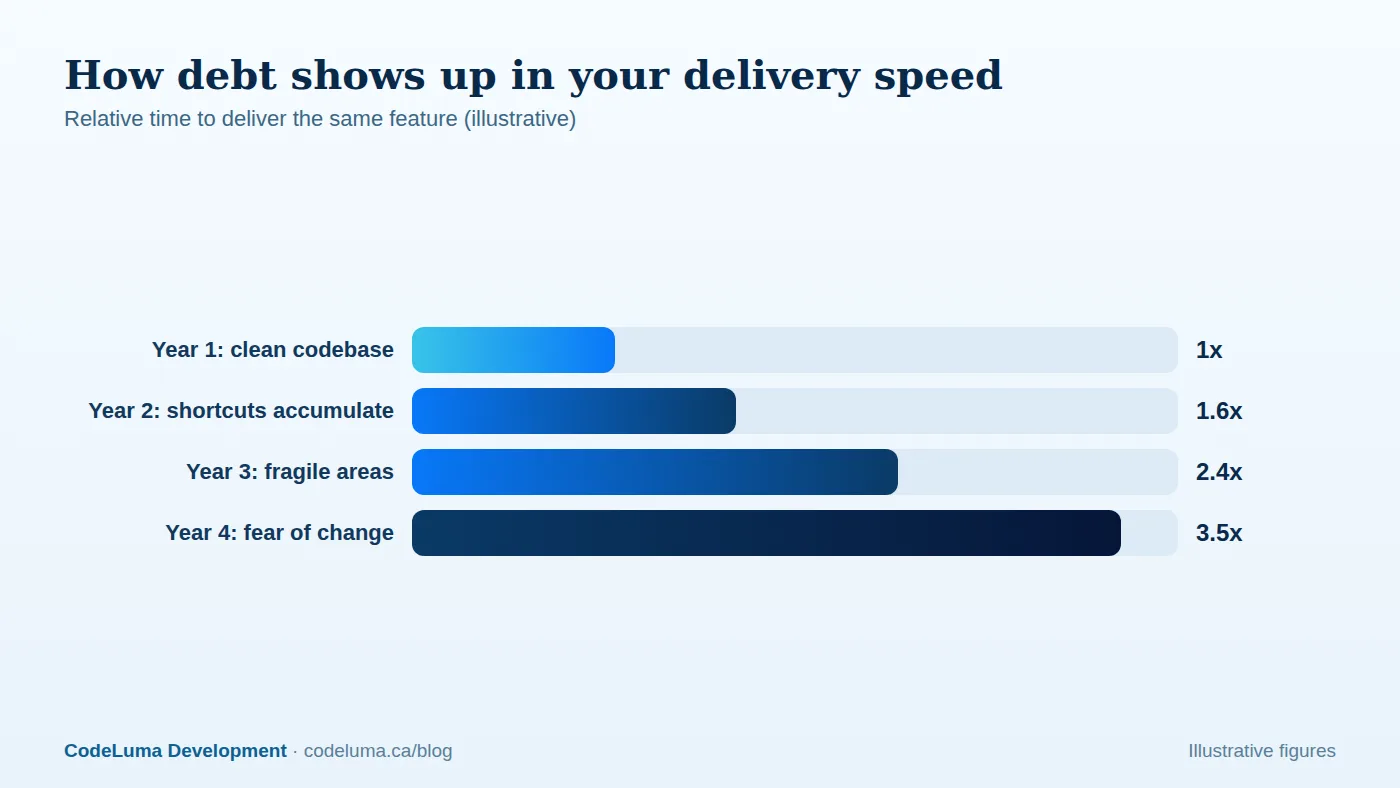
What technical debt looks like from the business side
You will not see "debt" on a dashboard. You will see its symptoms:
- Estimates keep growing. A change that would have taken two days last year now takes two weeks, and nobody can quite explain why.
- Every release feels risky. Fixing one bug creates another. Releases are scheduled on weekends, or avoided.
- Key people are irreplaceable. Only one developer understands the billing module, and they cannot take a holiday.
- Onboarding is slow. New developers need months before they can safely contribute.
- Security patches are postponed because upgrading a library might break something.
- Customers notice. Slow pages, glitches, and features that never quite arrive.

The main sources of debt
Rushed delivery. Skipping design, tests or review to hit a date. Occasionally justified, but only if the shortcut is recorded and repaid.
Missing automated tests. Without tests, every change is a gamble, so developers add code around problems rather than fixing them. The code becomes more convoluted with every release.
Outdated dependencies. Old frameworks and libraries accumulate vulnerabilities and make later upgrades harder. The gap between the version you run and the current version compounds.
Poor data design. A weak data model is the most expensive debt because it leaks into every feature and is painful to change once real data exists.
Copy-paste architecture. Duplicated logic means each bug must be fixed in several places, and inevitably one is missed.
Lost knowledge. No documentation, no architectural decision records, and staff turnover leave the code as the only source of truth.
How to put a number on it
You cannot measure debt precisely, but you can estimate its effect using four practical indicators:
- Lead time: how long from an approved request to production. Track it monthly and watch the trend.
- Change failure rate: the percentage of releases that cause incidents or need a hotfix.
- Time to recover: how long it takes to restore service after a failure.
- Developer time on unplanned work: the share spent on bugs and firefighting instead of new value. Many teams are shocked to find it exceeds half.
Multiply the unplanned work percentage by your annual engineering spend. That is a rough annual interest payment on your debt. If you spend $200,000 a year on development and forty percent goes to firefighting, you are paying about $80,000 a year in interest, before counting opportunity cost.
Why cheap code is often the most expensive
A low bid usually gets there by removing the things that prevent debt: discovery, architecture, testing, review, documentation and senior oversight. The first release may look identical. The difference appears when you ask for the second and third release, or when a security issue arrives, or when the original developer leaves. Then the savings reverse quickly, and the rescue project often costs more than building it properly the first time. This does not mean expensive is always better; it means the cheapest quote deserves the most scrutiny.
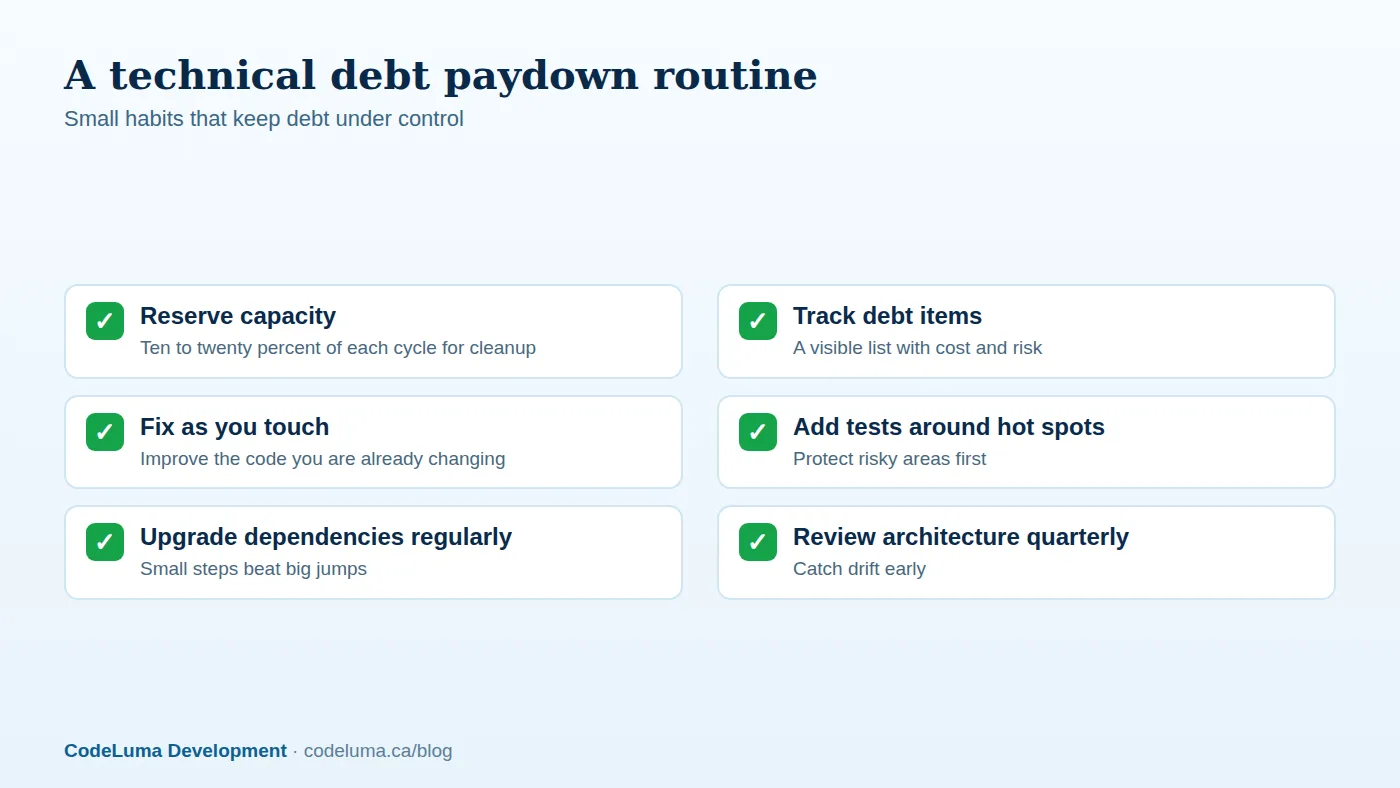

How to pay debt down deliberately
- Make it visible. Keep a debt register: each item, what it costs you now, the risk if ignored, and a rough size to fix. Share it with the business owner in plain language.
- Prioritise by interest, not by ugliness. Fix the code that changes often and breaks often before the ugly module nobody touches.
- Reserve capacity. Dedicate a fixed share of every cycle to paydown so it does not depend on heroic "cleanup sprints" that never happen.
- Add tests before you refactor so you can prove behaviour did not change.
- Upgrade continuously. Small monthly dependency updates are far cheaper than a five-year leap.
- Improve as you go. When you touch a module for a feature, leave it slightly better than you found it.
Preventing new debt
Prevention is cheaper than cure. Agree on a definition of done that includes tests, review and documentation. Use code review for every change. Automate deployment. Write down major decisions and the reasons behind them. Choose mainstream technologies with active communities. And when you take a deliberate shortcut, record it as debt with an owner and a target date.
Talking to your development partner
Ask three questions: how do you keep a codebase maintainable as it grows, what does a typical release process look like, and how do you handle upgrades and security patches? The answers reveal whether the team treats quality as part of the work or as an optional extra. An ongoing maintenance relationship that includes planned improvement time is the most reliable way we have found to keep debt from compounding.
Put this into practice with CodeLuma
CodeLuma builds with maintainability in mind from the first commit and offers structured debt-reduction plans for existing systems, so you regain release speed without stopping the business.
- Custom software development - tailored systems, integrations and internal tools.
- Maintenance and support plans - updates, monitoring and ongoing improvement.
- Website and web application development - fast, accessible, search-friendly builds.
Start a conversation. Tell us about your project and we will reply with practical next steps, or browse all CodeLuma services. CodeLuma Development Inc. is a Canadian company that works with teams in Windsor, Essex, London, Toronto, Mississauga and across Ontario, throughout Canada and remotely.