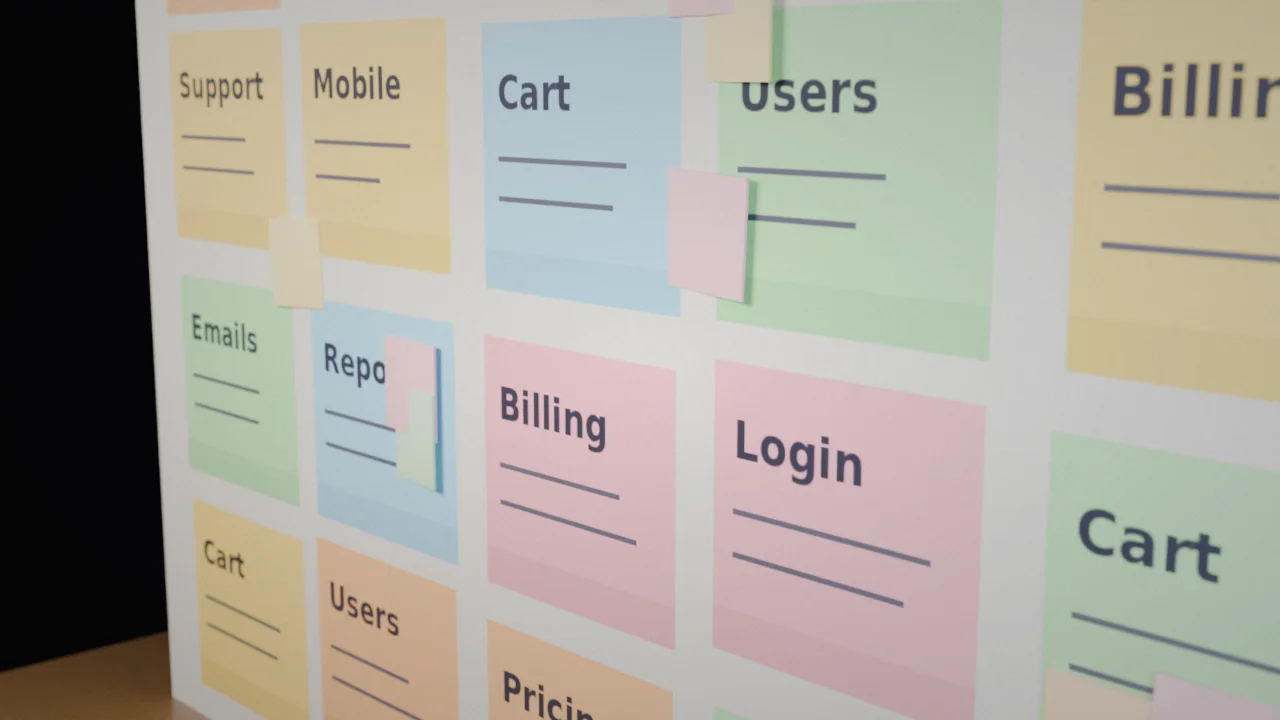
Most MVPs don't fail because the idea was wrong. They fail because the first release tried to do too much, took too long to build, and launched as a watered-down version of a full product instead of a sharp answer to one problem. Cutting scope well is a skill, and it starts with a filter you can apply consistently rather than a gut feeling about what "feels important."
Why Most MVPs Launch Too Big
Feature lists grow because every stakeholder has a reasonable idea. The founder wants a referral system. Sales wants a reporting dashboard. Support wants a help center built in. None of these are bad ideas on their own, but stacked together they turn a four-week build into a six-month one, and the actual question you needed answered, whether people will use the core product, gets buried under work nobody asked to validate yet.
An MVP is not a smaller version of your full vision. It is a working test of the one thing you're least sure about. Everything else is a distraction until that's proven.
Start With the One Journey That Has to Work
Before scoring anything, write down the single path a user takes from arriving to getting value. For a booking app, that might be: sign up, browse availability, book a slot, get a confirmation. For a B2B tool, it might be: log in, upload a file, see the processed result. Whatever it is, write it as a short sequence of steps, not a feature list.
Every feature in your backlog now gets judged against one question: does this belong inside that sequence, or does it live outside it? Anything outside it is automatically a candidate for "later," no matter how good the idea is.
The Two Questions Behind Every Scoring Method
You don't need a complicated framework. Most useful scoring comes down to two questions asked honestly about each backlog item:
- Does the core journey break without it? Not "would it help," but "does the user get stuck or leave if this is missing."
- What does it cost to build relative to everything else on the list? Not a full estimate, just a rough sense of whether it's a day of work or a project of its own.
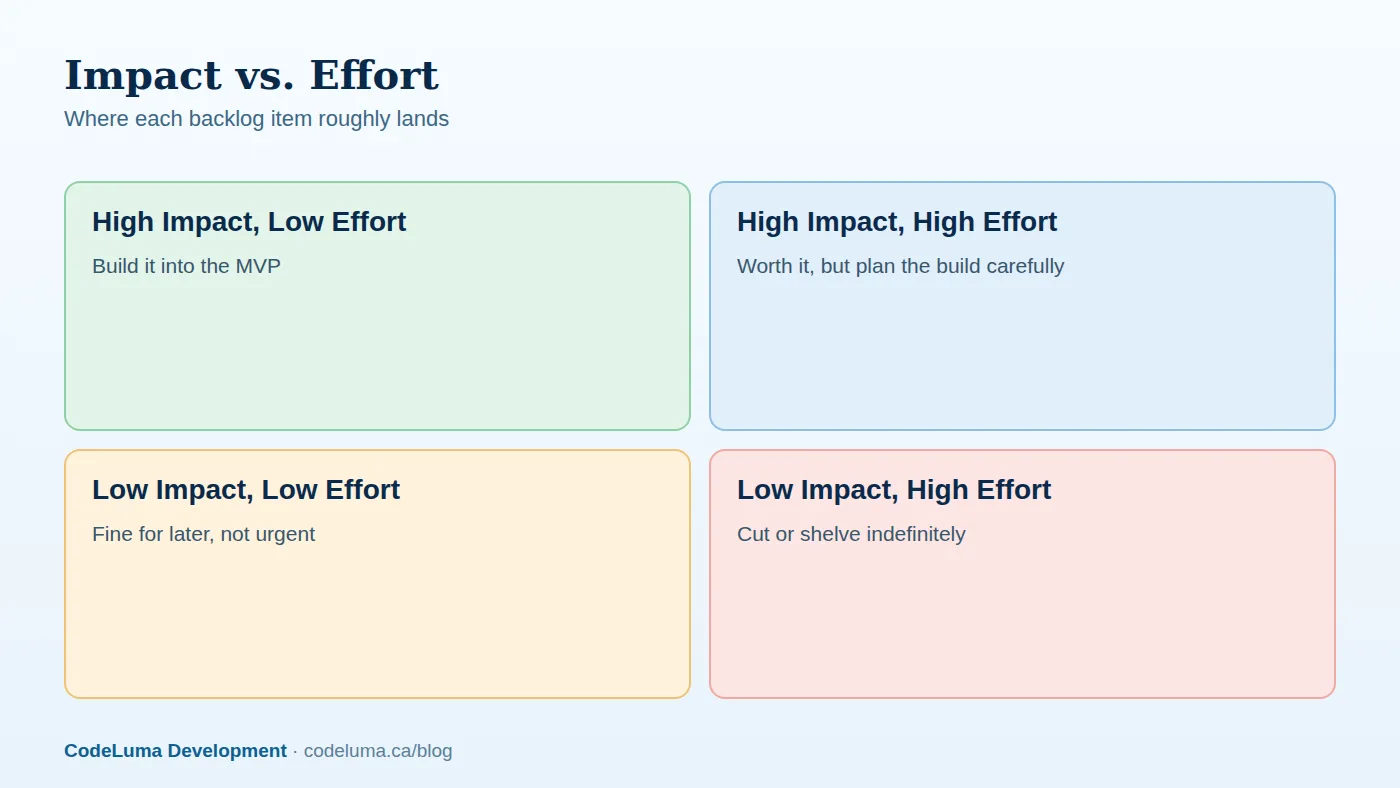
Impact and effort. That's it. Everything else, urgency, competitor pressure, personal excitement, is worth noting but shouldn't override those two questions when you're deciding what ships first.
A Simple Way to Score Your Backlog
Put your backlog in a spreadsheet or on a wall of sticky notes. For each item, score impact from 1 to 3 (breaks the journey, weakens the journey, doesn't touch the journey) and effort from 1 to 3 (small, moderate, large). You're not aiming for precision here, you're aiming for a fast, honest sort.
A composite example to illustrate the method: imagine a small logistics company building a portal so customers can track shipments online. "View shipment status" scores high impact, low effort, it's the whole point of the journey. "Export a branded PDF report" scores low impact, moderate effort, it's nice but nobody needs it to track a shipment. "Live chat support inside the portal" scores low impact, high effort, it solves a real problem but not the one this release is testing. None of this reflects a real client, but it shows how the same two questions sort very different kinds of requests the same way.
Turning Scores Into Three Lists
Once everything is scored, sort into three lists instead of a ranked backlog:
- Must-have: high impact, and the core journey genuinely does not work without it.
- Should-have soon: real value, but the journey survives without it at launch.
- Later: everything else, including good ideas that just aren't part of proving the core assumption yet.
The must-have list is your MVP. If it still feels large once you've been strict, that's usually a sign your core journey definition is too broad rather than a sign you need more time to build it all.
What Counts as "Must-Have" (the Bar Test)
A useful bar test: if you removed this feature entirely, could a real user still complete the core journey and get genuine value out of it? If yes, it's not must-have, no matter how often someone asks for it. Password reset, for instance, is often assumed to be must-have, but for a very early test with a handful of invited users, a manual reset by email might be entirely acceptable for the first release.
This is uncomfortable at first because it means shipping something that looks unfinished by normal product standards. That's expected. An MVP is supposed to look narrow. Its job is to answer a question, not to impress everyone who sees it.
Common Mistakes When Cutting Scope
A few patterns show up repeatedly when teams try to cut scope and end up back where they started:
- Scoring by opinion, not the journey. If a feature is discussed without checking it against the written user journey, it tends to get rated "important" by default.
- Treating polish as a feature. Visual refinement, animations, and edge-case handling for rare scenarios often sneak into "must-have" because they feel unfinished otherwise. They're rarely blocking the core journey.
- No record of what got cut. Deferred features get raised again in a later meeting as if they were never discussed, because nobody wrote down that they were reviewed and deliberately deferred.
- Letting the scope grow after it's locked. A new request arrives mid-build, sounds urgent, and gets added without going through the same filter that everything else went through.
- Confusing "later" with "never." Teams sometimes cut so aggressively that genuinely necessary functionality, like basic error handling or data backups, gets treated as optional. Those aren't features to filter, they're baseline requirements.
A Quick Checklist Before You Lock Scope
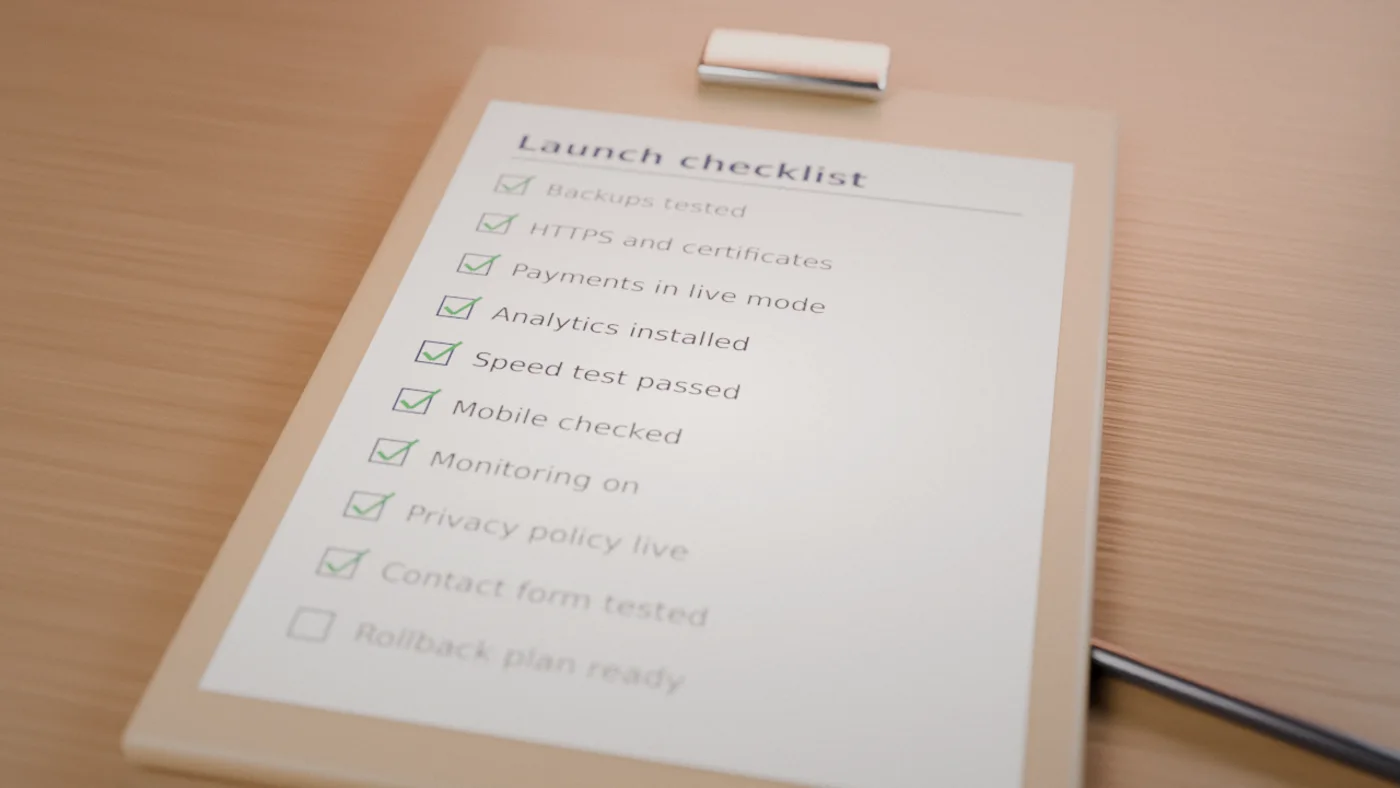
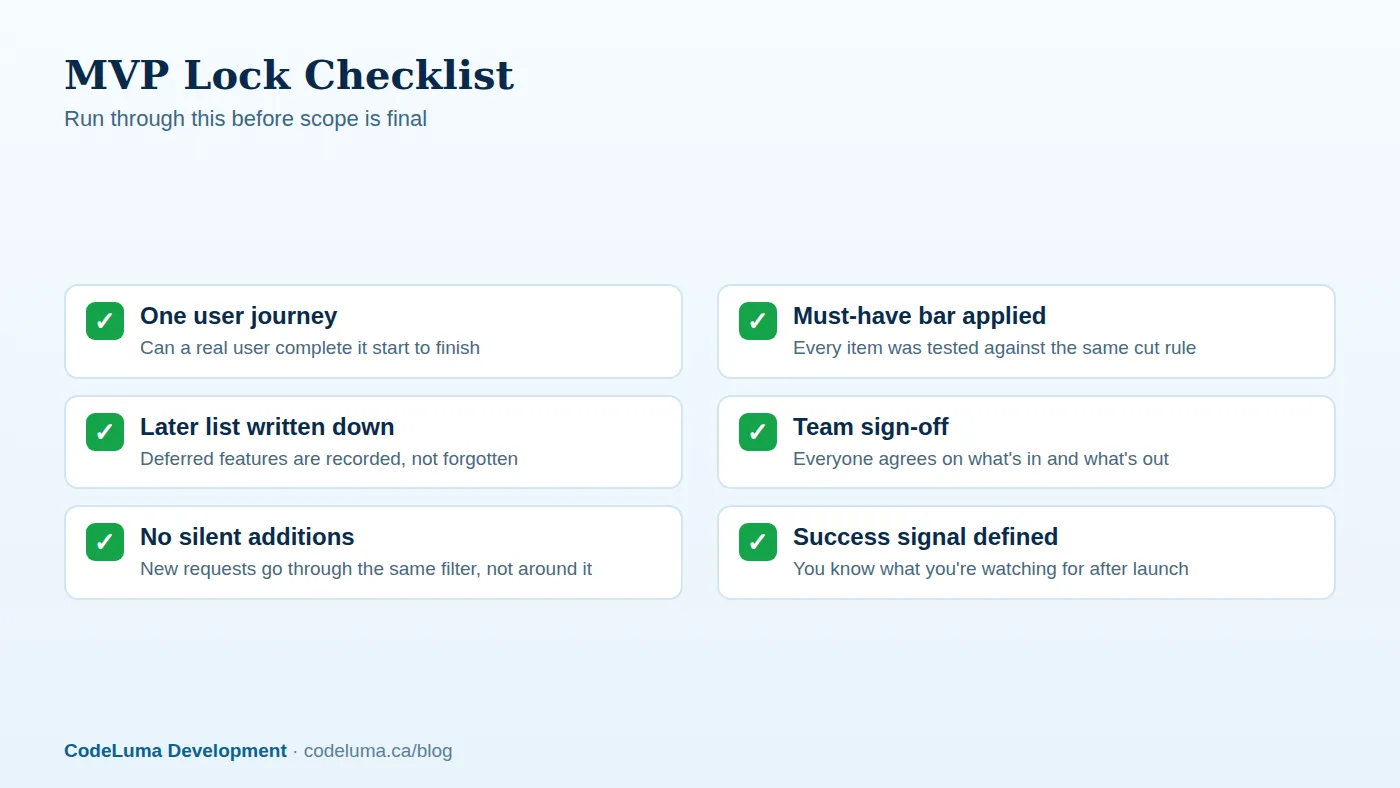
Before you consider the MVP scope final and ready to hand to a development team, check that:
- The core user journey is written down as a short, specific sequence of steps.
- Every backlog item has been scored against that journey, not judged on its own merits.
- The must-have list is short enough to build without needing to cut corners on quality.
- The should-have and later lists are written down somewhere the whole team can see, not just remembered.
- Everyone involved, not just the loudest voice, has agreed on what's in and out.
This kind of scoping conversation is exactly what a good custom software partner should walk through with you early, before estimates or timelines get discussed, because the scope decides the cost far more than the technology choice does.
When to Bring Back the "Later" List
The later list isn't a graveyard, it's a queue. Once the MVP is live and you're watching how people actually use it, some of those deferred features will turn out to matter a lot, and others will turn out to be unnecessary entirely. That's the point of shipping narrow: you get real evidence instead of guessing.
Revisit the list after you have enough real usage to trust, not after a fixed number of weeks. If you're building a web application and traffic or usage data is still thin, resist the urge to add features just because the original list said to.
Wrapping Up
Cutting scope isn't about shipping less for its own sake. It's about being honest with yourself about which features are actually required to test the thing you're unsure about, and which ones are just comfortable to build because they're familiar or expected. A simple impact-versus-effort filter, applied consistently and in writing, does most of the work. The discipline is in resisting the urge to skip the filter when a request feels urgent.
If you're staring at a backlog that's too big to build in one pass and want a second opinion on where the line should sit, that's a conversation worth having before scope, not after.
Put this into practice with CodeLuma
When we scope a new build, we run this same must-have filter with a client before a single line of code gets written, so the first release targets one working user journey instead of a wishlist. We're upfront about what a genuine MVP requires and what can honestly wait, and we write the "later" list down so it doesn't quietly disappear. If your backlog already feels too big to ship, we're glad to work through it with you.
- Custom software development - tailored systems, integrations and internal tools.
- Website and web application development - fast, accessible, search-friendly builds.
- Maintenance and support plans - updates, monitoring and ongoing improvement.
- CodeLuma support - help from a real team when you need it.
Start a conversation. Tell us about your project and we will reply with practical next steps, or browse all CodeLuma services. CodeLuma Development Inc. is a Canadian company that works with teams in Windsor, Essex, London, Toronto, Mississauga and across Ontario, throughout Canada and remotely.