A micro-SaaS is a small software-as-a-service product that solves one specific problem for a narrow group of customers, typically run by one person or a very small team. Think of a tool that turns invoices into accounting entries for a particular trade, monitors a particular type of listing, or automates a tedious compliance report. Micro-SaaS products do not chase venture capital or global scale; they aim for sustainable, profitable revenue, from a few thousand to a few tens of thousands per month. This guide walks from concept to first paying customer.
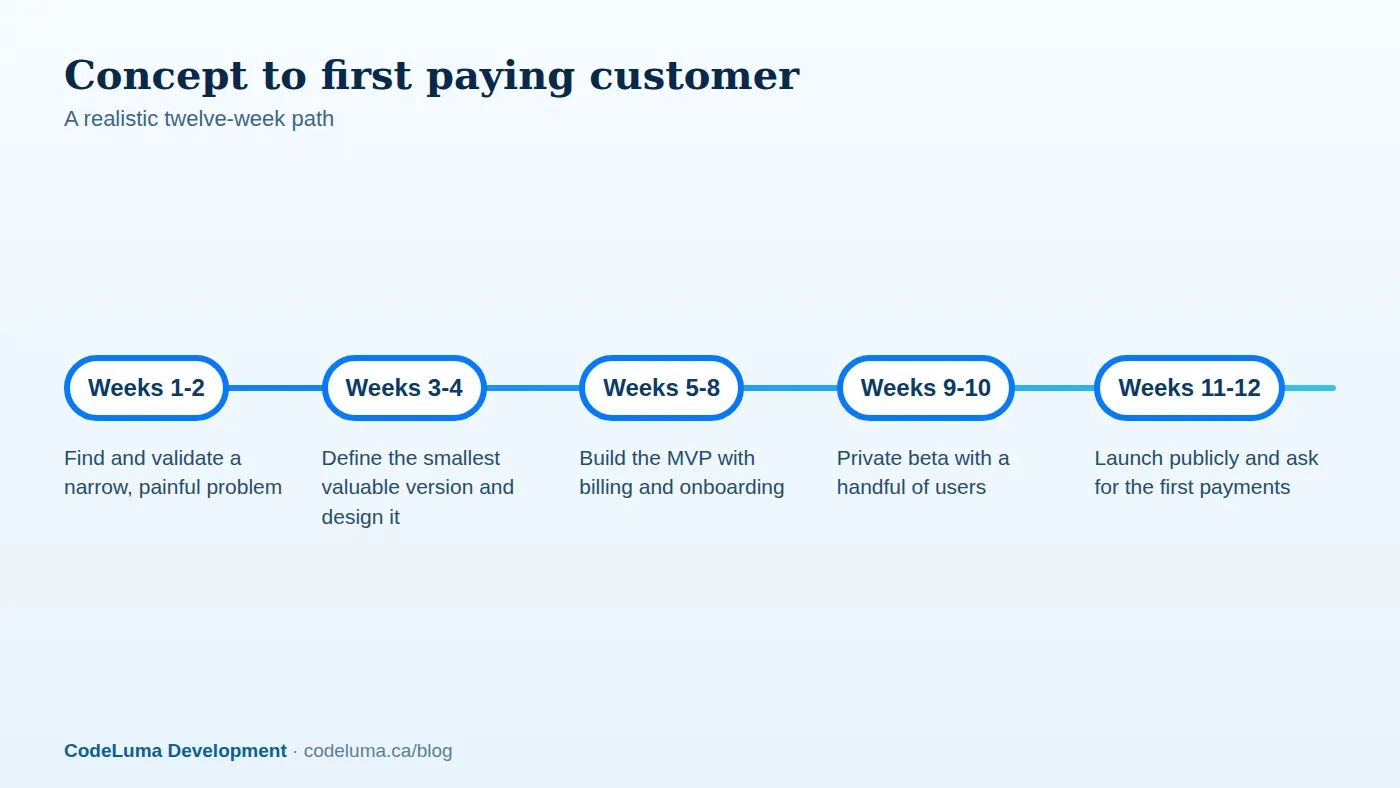
Find a narrow, painful problem
The best micro-SaaS ideas come from observed pain, not brainstorming. Look for tasks that people do repeatedly with spreadsheets, email and copy-paste; workflows that a niche industry handles with clumsy general-purpose software; and complaints in forums, reviews and support threads. Your own work and industry are gold mines. Good signals: people already pay to solve the problem (with tools, freelancers or staff time), the pain is frequent, the audience is reachable in specific communities, and the value is easy to express in money or hours saved. Be sceptical of ideas that need everyone to change behaviour, or serve customers who cannot pay.
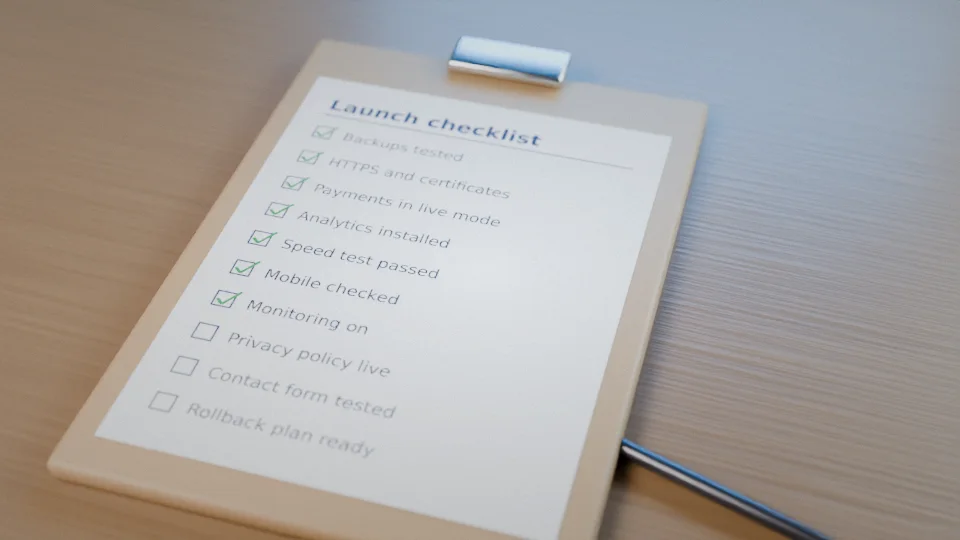
Validate before you build
- Talk to at least ten to fifteen potential customers. Ask how they handle the problem today, how much time or money it costs, what they have tried and what they would pay. Listen for specifics, not politeness.
- Test the message. Write a one-page description and a sign-up form; send it to the people you interviewed and to communities where the audience gathers.
- Ask for commitment. Pre-orders, deposits or letters of intent are stronger signals than "sounds great." Even a few paid pilots validate demand.
- Do it manually first. Deliver the result by hand for a few customers to learn the workflow before automating it.
The approach mirrors the lean methods in our MVP guide and our article on validating ideas.
Scope the smallest valuable product
Define the single job the product does and the shortest path to that outcome. List everything you imagine, then cut ruthlessly: dashboards, team features, integrations, customisation and settings can wait. A typical MVP includes authentication, the core workflow, a simple account and billing area, and email notifications. Write the scope as user stories, and prioritise by the question: could a customer get the promised value without this? If yes, defer it. See our guide to scoping an MVP.
Choose a boring, productive stack
A micro-SaaS lives or dies on the speed at which one or two people can build and maintain it. Choose mainstream technology your team knows well, a mature web framework, a relational database, managed hosting and a managed authentication and email service. Avoid microservices, exotic databases and heavy infrastructure. Design for multiple customers from day one, with every record tied to an account and access controlled at the data layer, as described in our multi-client article. Use existing services for solved problems: payments, email, file storage and error tracking. Keep it easy to deploy and to roll back, following our deployment guide.
Plan billing early
Recurring revenue is the point, so subscription billing belongs in the MVP. Use a payment platform that handles cards, invoices, taxes where supported, trials, upgrades and failed-payment retries. See our subscription billing guide and our payment gateway article. Keep pricing simple: two or three plans, priced against the value delivered rather than your costs, with an annual option at a discount. Offer a short trial or a money-back guarantee, and charge early; free users teach you far less than paying ones. Decide how you handle cancellations, refunds, and data export.
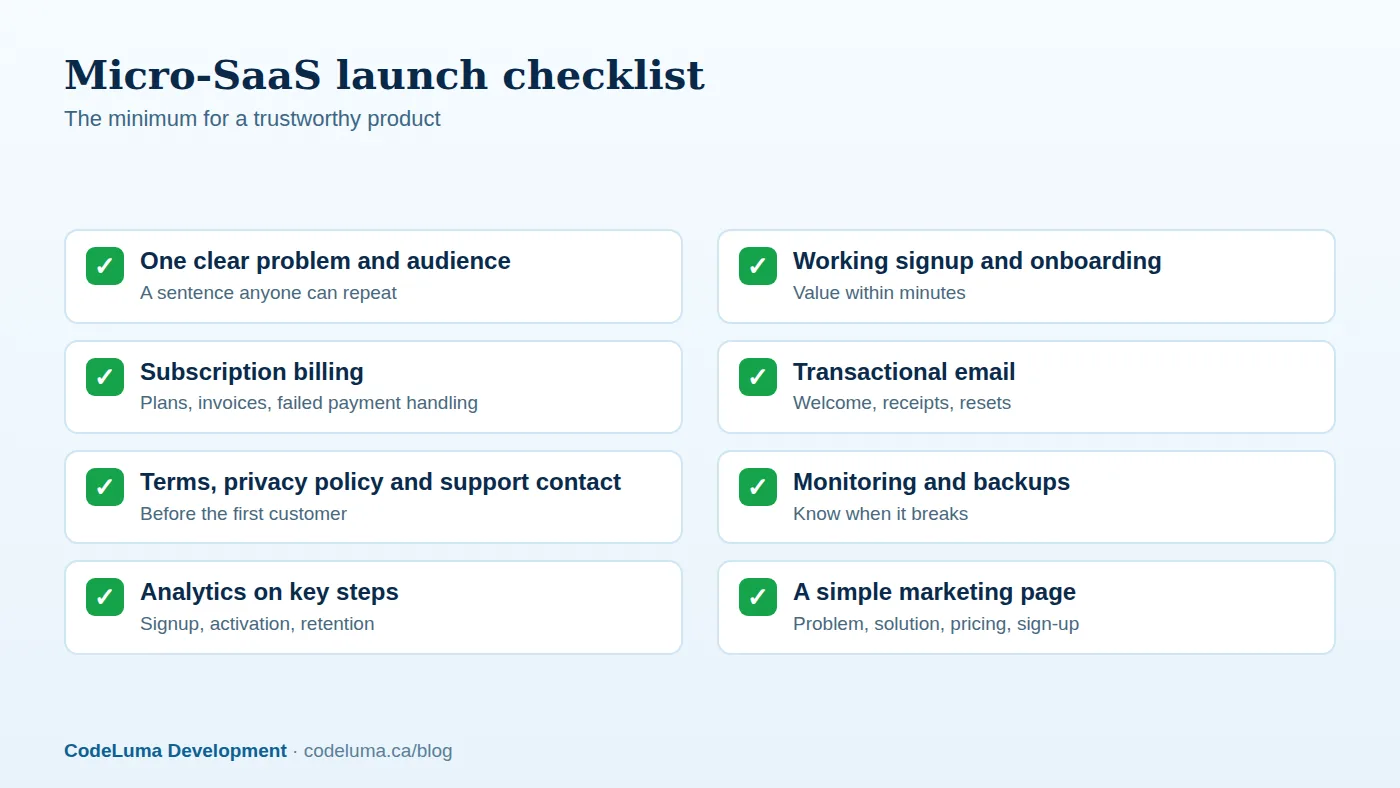
Design onboarding for fast value
New users should reach their first success within minutes. Reduce sign-up friction, pre-fill sample data or templates, guide the first task step by step, and send a helpful welcome email. Track the activation moment, the action that predicts retention, and improve the path to it. Small touches such as clear empty states, useful error messages and a visible way to contact you build trust. Design and performance matter even for tiny products; see our front-end performance article.
Security, privacy and trust
Small products handle real customer data, and a breach can end a small company. Use proven authentication, hash passwords properly, enforce HTTPS, back up data and test restores, keep dependencies updated and limit who can access production. Publish a plain-language privacy policy and terms, and respect regional privacy rules; see our security checklist and our privacy law guide. This is general information, not legal advice; consult a lawyer for your specific product.

Launch and find the first customers
- Start with the people you interviewed. They already have the problem and know you.
- Go where the audience already gathers: niche communities, forums, newsletters, social groups, industry events and directories. Be helpful first, promotional second.
- Create useful content targeting the searches your audience makes; see our technical SEO checklist and the tactics in our blog.
- Offer white-glove onboarding to the first ten customers and learn from every conversation.
- Ask for referrals and testimonials once customers succeed.
- Consider marketplaces and integrations with platforms your customers already use, where your product can be discovered.
Measure what matters
Track monthly recurring revenue, sign-ups, activation rate, churn, and customer acquisition cost. For a tiny product the most important numbers are simple: how many paying customers, how many stay, and whether the trend is upward. Talk to churned customers. Improve retention before spending heavily on acquisition, because leaks defeat growth.
Run it sustainably
Micro-SaaS founders often have day jobs or other clients, so operations must be light: automated backups and monitoring (our monitoring guide), a support inbox with templates, a public status or help page, regular dependency updates, and a small backlog you work through weekly. Budget hosting and service costs, and keep margins healthy. Document the system so that you, or a contractor, can maintain it, and consider a maintenance retainer, as in our article on the value of a retainer, so that a busy month does not become an outage.
Common mistakes
- Building for months before speaking to a customer.
- Choosing a market too small to pay, or too broad to reach.
- Feature creep instead of shipping.
- Pricing too low and attracting the wrong customers.
- Neglecting support, security and backups because the product is "small."
The fastest route is a narrow problem, a lean build and early payments. Our software team builds micro-SaaS MVPs quickly with billing, onboarding and multi-tenant foundations, and our hosting and maintenance plans keep the product running while you focus on customers.
Put this into practice with CodeLuma
CodeLuma helps founders take a micro-SaaS from idea to first paying customer, with fast MVP builds, billing, hosting and ongoing maintenance, so you spend your time on customers instead of infrastructure.
- Custom software development - tailored systems, integrations and internal tools.
- Managed hosting - monitored, backed-up, Canadian-friendly hosting.
- Maintenance and support plans - updates, monitoring and ongoing improvement.
- Website and web application development - fast, accessible, search-friendly builds.
Start a conversation. Tell us about your project and we will reply with practical next steps, or browse all CodeLuma services. CodeLuma Development Inc. is a Canadian company that works with teams in Windsor, Essex, London, Toronto, Mississauga and across Ontario, throughout Canada and remotely.