"How much will it cost, and can you guarantee it?" is the first question most clients ask, and it deserves an honest answer. The way a project is contracted determines who bears the risk of the unknown: you, the developer, or both. Two models dominate software work, fixed price and time and materials, and each has zealous fans and critics. In practice the right choice depends on how well the project is understood, how likely it is to change, and how much you value certainty compared with flexibility. This guide explains both, and a practical hybrid.
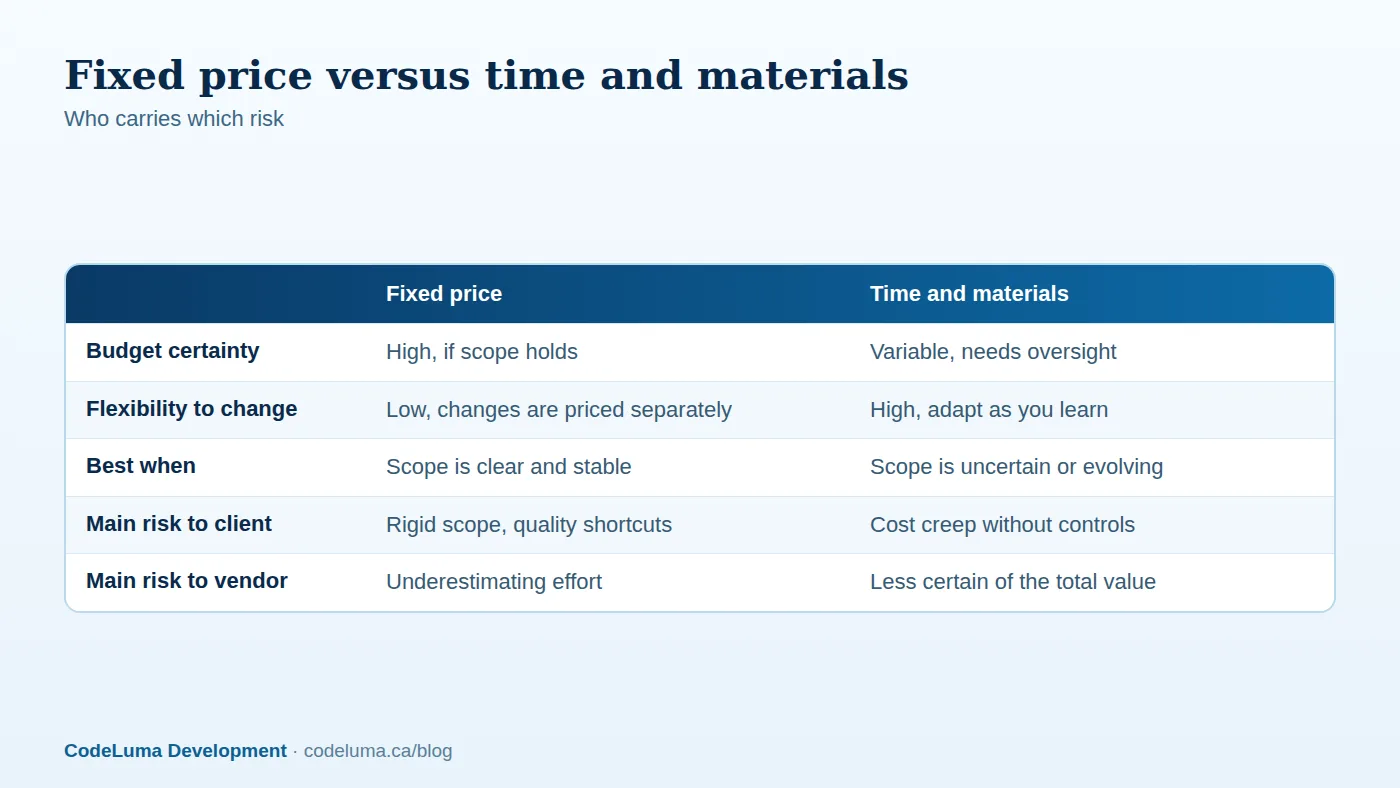
Fixed price: how it works
The vendor agrees to deliver a defined scope for a set fee, usually paid in milestones. The client gets a known budget and shifts the effort risk to the vendor: if the work takes longer than expected, that is the vendor's problem. The scope is described in a specification, user stories, wireframes or a statement of work with acceptance criteria.
Advantages: budget certainty, simple to approve internally, clear milestones, and a strong incentive for the vendor to be efficient.
Disadvantages: the fixed scope is only as good as the specification, and software requirements almost always evolve once real users see working screens. Every change becomes a negotiation and a change request. Because vendors price in risk, quotes often include a buffer, or, if the vendor underquoted, they may cut corners, reduce testing and resist changes. A specification detailed enough to fix the price is itself costly and time-consuming to produce, and it can lock in assumptions that turn out to be wrong.
Time and materials: how it works
You pay for the actual time spent, at agreed rates, usually reported weekly or monthly. The scope is guided by a prioritised backlog rather than a fixed specification, and you can adjust priorities as you learn. Estimates are provided but are not commitments.
Advantages: flexibility, ability to start sooner, freedom to change direction, no padding for unknowns, and you only pay for work actually needed. It fits agile development well, where each iteration is demonstrated and feedback shapes the next.
Disadvantages: the final cost is uncertain, and the client needs to manage priorities actively. Without discipline, scope can creep and budgets can balloon. It requires trust and transparency; you should see regular reports of hours by task and demonstrable progress.
When fixed price fits
- The scope is small to medium and clearly understood, such as a brochure website, a standard integration or a well-specified feature.
- Requirements are stable, and change is unlikely.
- A fixed budget is a hard constraint, for example a grant or a board-approved amount.
- A previous discovery phase produced a solid specification and estimate; see our discovery phase article.
When time and materials fit
- The problem is new or ambiguous, and learning is part of the work: an MVP, a product experiment, an innovative feature; see our MVP guide.
- Requirements will evolve based on user feedback.
- The project is large and long-running, with many unknowns.
- Ongoing improvement and support are the goal, as in a retainer (our retainer article).
- You want maximum control over priorities and are able to invest time in managing the backlog.
Hybrid models
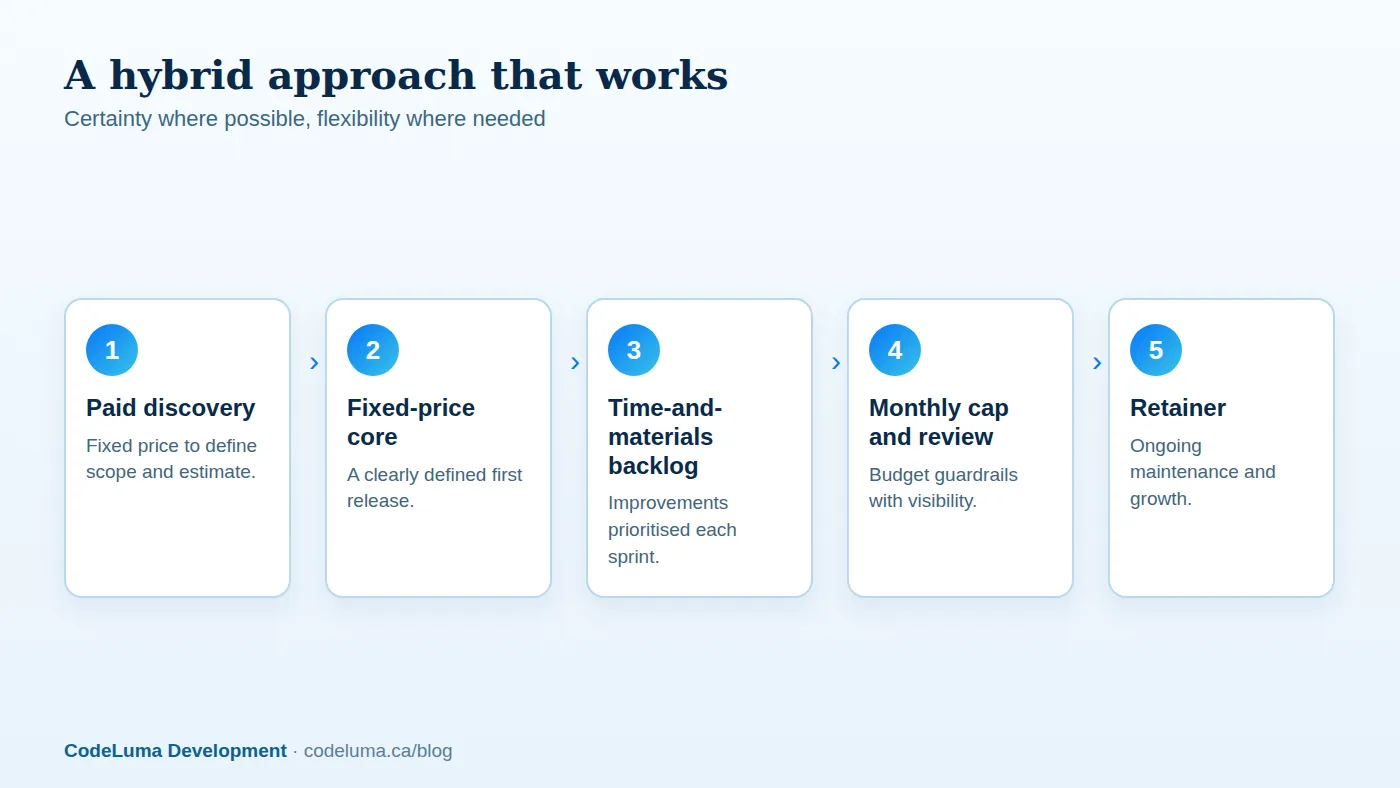
Many of the best engagements combine approaches:
- Fixed-price discovery. A short, paid phase produces a specification, prototype, architecture recommendation and reliable estimate. You can then take that document to any vendor.
- Fixed price for a well-defined first release, or fixed price per milestone or per sprint.
- Time and materials, capped, for the evolving backlog, with a monthly budget and review so spending stays visible and controllable.
- Target-price or "not-to-exceed" contracts, where the vendor commits to a maximum unless the scope changes, sharing savings if the work finishes early.
- Retainer for maintenance and continuing enhancement after launch; see our post-launch article.
Making fixed price work
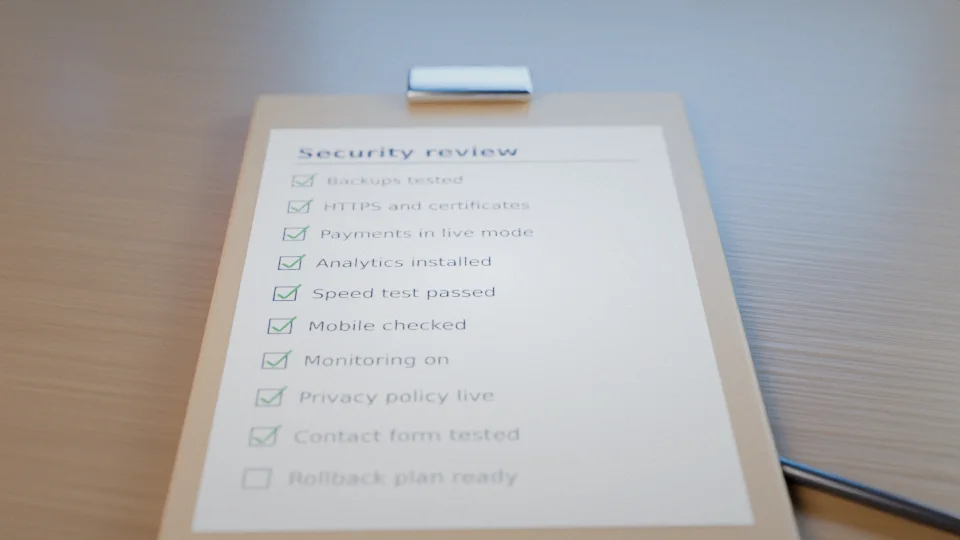
- Write acceptance criteria for every deliverable so "done" is objective, including performance, browser and device support, accessibility and security expectations.
- List what is out of scope explicitly: hosting, content entry, training, third-party fees, ongoing maintenance.
- Define a change-control process: how changes are requested, estimated, approved and priced, with reasonable turnaround times.
- Tie payments to delivered milestones rather than dates, and hold a portion until acceptance.
- Include a warranty period for defects after launch.
- Ensure the estimate is credible; see how we estimate projects. An unusually low bid is a warning sign, as covered in our red flags article.
Making time and materials work
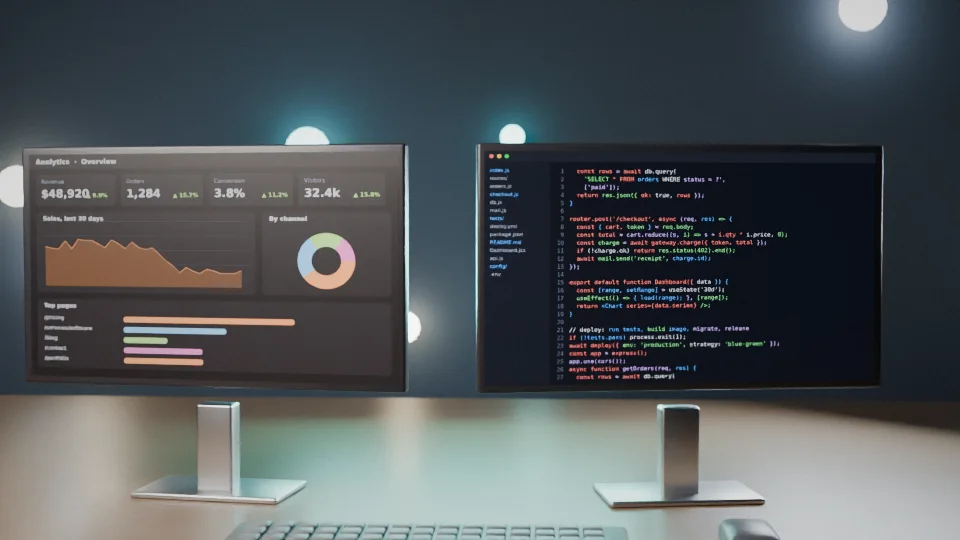
- Agree an estimate range and a budget cap, with an obligation to warn before approaching it.
- Insist on transparent reporting: hours by task or feature, usually weekly.
- Work in short iterations with demonstrations, so progress is visible; see our communication article.
- Maintain a prioritised backlog and review it regularly with a decision-maker who can say no.
- Track value, not just hours: features shipped, metrics moved, users onboarded.
- Agree on rates, who is on the team, and how junior and senior time are billed.
Common misconceptions
- "Fixed price means no surprises." Surprises just become change requests or quality compromises.
- "Time and materials means unlimited cost." With caps, reporting and reviews it can be managed, and it often yields better outcomes.
- "The hourly rate tells you the cost." A more experienced developer at a higher rate may deliver in a fraction of the hours, with fewer defects.
- "A detailed specification eliminates risk." It reduces some, but the biggest risk is building the wrong thing.
Other cost items to include in your budget
Hosting and infrastructure (our hosting options article), third-party services and licences, payment fees, content creation, testing devices, legal review, and ongoing maintenance and support, which usually amount to a meaningful yearly percentage of build cost; see the retainer article. Add a contingency of perhaps ten to twenty percent for the unexpected, more for uncertain projects.
How to choose
- How clear and stable is the scope? Clear and stable points to fixed; uncertain to time and materials or hybrid.
- How important is budget certainty compared with flexibility?
- How much time can you invest in guiding the project?
- How much do you trust the vendor, and can you verify progress through demonstrations and reports?
- Can you break the project into phases and use different models for each?
The most important thing is not the model but the quality of the relationship and the transparency that goes with it; see what to look for when hiring. At CodeLuma we often propose a fixed-price discovery, followed by fixed-price or capped phases for the defined core and a flexible backlog for evolution. Tell us about your project and we will suggest a structure. Our software team works under all these models, with maintenance plans for the long term.
Put this into practice with CodeLuma
CodeLuma offers fixed-price phases for clear scopes, time-and-materials for discovery-heavy work, and hybrids that give you budget certainty with room to learn, always with transparent reporting.
- Custom software development - tailored systems, integrations and internal tools.
- Website and web application development - fast, accessible, search-friendly builds.
- Maintenance and support plans - updates, monitoring and ongoing improvement.
Start a conversation. Tell us about your project and we will reply with practical next steps, or browse all CodeLuma services. CodeLuma Development Inc. is a Canadian company that works with teams in Windsor, Essex, London, Toronto, Mississauga and across Ontario, throughout Canada and remotely.