White-label software lets one company build a product and other companies, often agencies, consultants or industry partners, sell it under their own brand. Done well it is a powerful business model: the builder gains distribution and recurring revenue without a large sales team, and the resellers gain a product they could never afford to develop themselves. Done badly it produces a brittle tangle of per-client customisations. This guide explains the architecture and operations needed to build a white-label, multi-client product that scales.
White-label, multi-tenant and reseller: the terms
Multi-tenancy means one running application serves many customers (tenants), each with their data kept separate. White-labelling means the product can present as the tenant's or reseller's own brand. Reselling adds commercial layers: partners buy at wholesale, set their own prices, manage their own clients and receive support from you behind the scenes. Many products combine all three: an agency account contains many client accounts, each with its own branding, users and data.
Choose the tenancy model deliberately
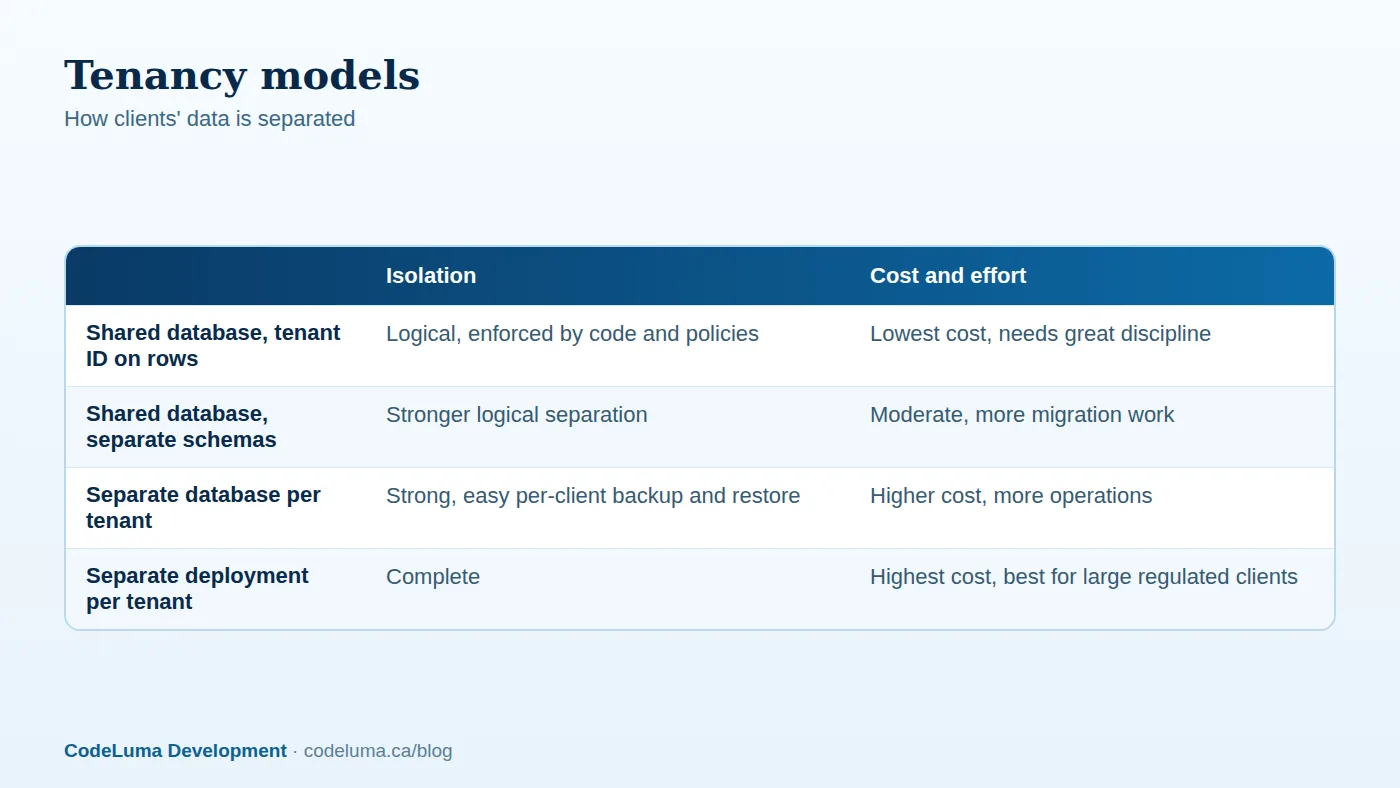
The table above shows the spectrum. A shared database with a tenant identifier on every row is the cheapest and simplest to operate, but a single missing filter can leak one client's data to another, so enforcement must be systematic: middleware that sets the tenant context from the authenticated user, query scopes that always apply it, database row-level security where available, automated tests that attempt cross-tenant access, and code review checklists. Separate schemas or databases per tenant increase isolation and make per-client backups, restores, exports and deletions easier, at the price of more operational complexity when migrating hundreds of databases. Some clients, in healthcare, finance and government, will insist on dedicated environments; design so you can offer that as a premium tier without rewriting the product. See our scalable architecture guide.
Branding that goes all the way through
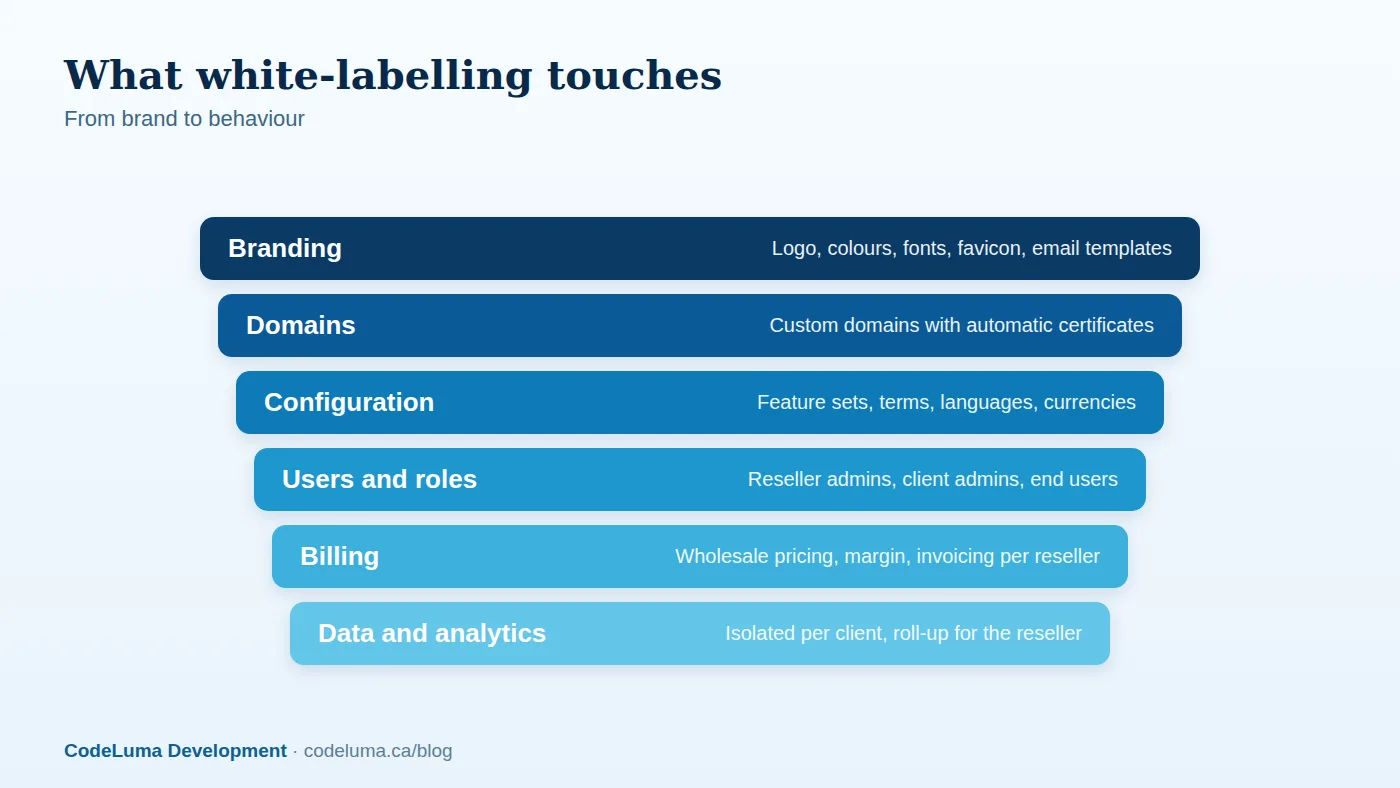
- Visual identity: logo, colours, typography and favicon applied through design tokens and themes, not per-client forks of the code.
- Custom domains: clients use app.theirbrand.com with automatic certificate issuance and renewal; see our DNS and SSL article. Handle domain verification, and detect the tenant from the hostname.
- Emails and documents: transactional emails, invoices, PDFs and reports carry the reseller's name, sender domain and templates. Configure proper authentication records per sending domain; see our notification systems article.
- Content and language: terms, privacy policy, help links, support contact, currencies and translations.
- Hide your own brand throughout: URLs, error pages, metadata and API responses.
Configuration, not customisation
The single most important discipline is to handle differences between clients through configuration and feature flags, never through code forks. Maintain a tenant settings model: enabled modules, limits, workflow options, terms, integrations. Use plan-based entitlements so features can be switched on per reseller or client; the techniques in our feature flags article apply directly. Provide extension points, such as webhooks, custom fields and an API, so partners can adapt the product without your team writing bespoke code for each. A codebase with client-specific branches becomes impossible to upgrade.
Users, roles and hierarchy
Model the organisational structure explicitly: platform administrators (you), reseller administrators, client administrators, and end users, each with least-privilege permissions. Resellers should manage their clients (create accounts, view usage, impersonate for support with a logged trail) but must never see data belonging to other resellers. Support single sign-on for larger clients. See our access-control guide and the audit practices in our audit logging guide; impersonation and admin actions in particular must be logged.
Billing and revenue share
Commercial design is part of the product. Common models: wholesale price per client or per seat with the reseller setting the retail price; a percentage revenue share; tiered plans with volume discounts; or a platform fee plus usage. Decide who invoices the end client: the reseller (you invoice them wholesale) or you on their behalf under their brand. Payment platforms with marketplace or connected-account features can split payments automatically and handle payouts; see our payment gateway guide and our subscription billing guide. Provide reseller dashboards showing clients, usage, invoices and margins, and handle taxes and currencies carefully. Consult an accountant on tax obligations; this is general information only.
Onboarding and provisioning
Resellers need to add clients in minutes, not days. Automate provisioning: create the tenant, seed default data and templates, apply branding, configure the domain, invite users. Offer client-creation through the interface and an API so partners can integrate onboarding into their own systems. Provide import tools, sample data, guided setup and documentation, and a sandbox environment for partners to demo and train. Track activation: how many clients each reseller created and how many actually use the product.

Operating a multi-client platform
- Noisy neighbours: one tenant's heavy usage must not degrade others. Apply per-tenant rate limits, quotas, queue fairness and resource monitoring; see our traffic spike playbook and our background jobs guide.
- Upgrades: one codebase means you can release to everyone simultaneously, using staged rollouts (zero-downtime deployments). Communicate changes to resellers and offer opt-in periods for major UI changes.
- Support tiers: resellers provide first-line support to their clients; you provide second-line support to resellers with clear documentation, escalation paths and service levels. See our maintenance retainer article.
- Backups and recovery, including tenant-level restores and data export on request; see our backup guide.
- Monitoring per tenant: errors, performance and usage segmented so you can spot a single struggling client; see our monitoring guide.
Security and compliance
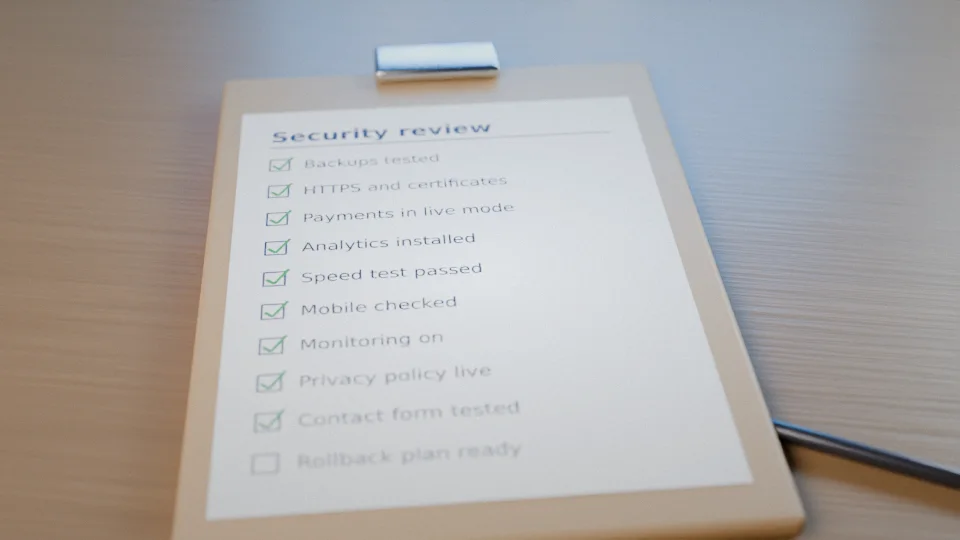
Because one flaw can expose many clients, apply the security practices in our security audit guide rigorously: penetration testing focused on tenant isolation, encryption in transit and at rest, secrets management (our secrets guide), and a documented incident response process. Data processing agreements, data residency options and deletion on termination are common reseller and client requirements; see our privacy law overview. This is general information, not legal advice.
Legal and commercial foundations
Agree clear reseller terms: brand usage, support responsibilities, pricing rules, data ownership, termination and what happens to clients if the relationship ends. Clarify intellectual property; you keep the platform and the reseller keeps their brand and client relationships. Have a lawyer draft or review agreements.
Pitfalls to avoid
- Building client-specific forks instead of configuration.
- Tenant filters implemented ad hoc, leading to data leaks.
- Branding that stops at the logo, leaving your name in emails and URLs.
- No per-tenant limits, so one client can slow everyone.
- Pricing that makes reselling unprofitable for partners.
- No plan for a large client demanding an isolated deployment.
Start with a small number of friendly resellers, learn from their needs and keep the platform generic. Our software team designs and builds white-label and multi-tenant products, our hosting service provides the isolated and shared environments they run in, and our maintenance plans keep the platform current and secure.
Put this into practice with CodeLuma
CodeLuma builds white-label and multi-tenant platforms with strict data isolation, per-client branding and reseller billing, so one codebase can serve many brands profitably and safely.
- Custom software development - tailored systems, integrations and internal tools.
- Website and web application development - fast, accessible, search-friendly builds.
- Managed hosting - monitored, backed-up, Canadian-friendly hosting.
- Maintenance and support plans - updates, monitoring and ongoing improvement.
Start a conversation. Tell us about your project and we will reply with practical next steps, or browse all CodeLuma services. CodeLuma Development Inc. is a Canadian company that works with teams in Windsor, Essex, London, Toronto, Mississauga and across Ontario, throughout Canada and remotely.